Native Plant of the Month: Snowberry

As the holiday season arrives and winter settles in, many native plants slip into a quiet dormancy. However, one native plant continues to shine–quite literally. Snowberry (Symphoricarpos albus var. laevigatus), with its distinctive bright white fruit, brings a subtle beauty and ecological value to California’s winter landscapes.
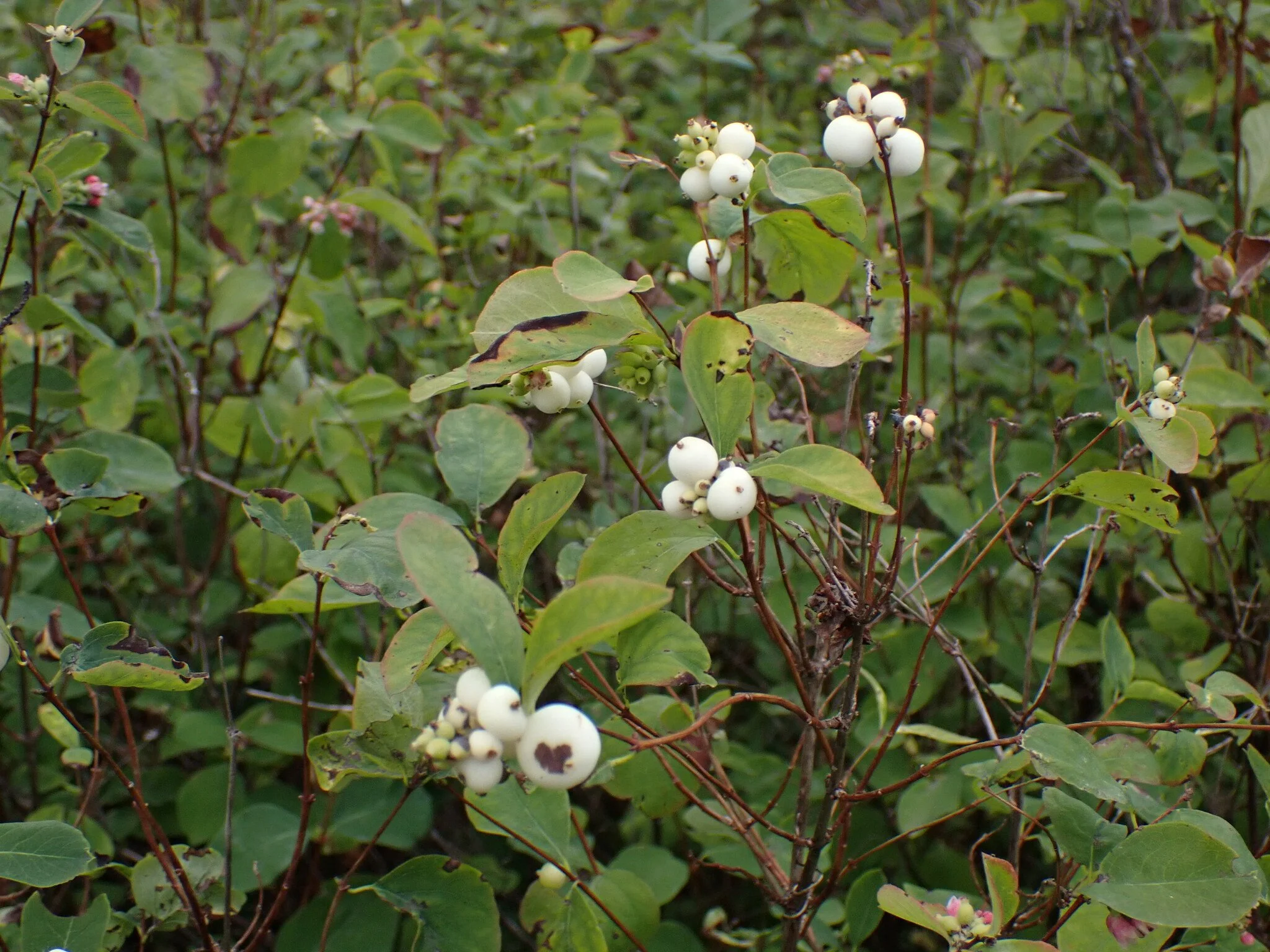
Ludwig Treuter, iNaturalist (CC BY-NC)
Snowberry is a small, deciduous shrub in the honeysuckle family, typically growing between 2 and 5 feet tall, with smooth, bluish-green leaves and beautiful pale pink flowers that bloom from late spring into summer. These flowers are a reliable source of nectar for native bees and other pollinators. By autumn, the plant produces clusters of distinctive white berries—its most recognizable feature—that persist into the winter months, even after the leaves have dropped.
While the berries are not edible by humans, they play an important role for wildlife during the coldest months of the year. Many overwintering birds, including robins, thrushes, and quails, rely on the Snowberry fruit during the winter when other food sources are unavailable or scarce. The shrub’s dense, twig-like structure also provides valuable shelter—because everyone deserves to be cozy during the holidays!
Fire and Disturbance Resilience
One of snowberry’s most remarkable traits is its ability to bounce back after a disturbance. While it can reproduce from seed, rhizomes are its primary method of regeneration. These underground stems allow snowberry to resprout quickly after a fire, drought, or physical disturbance, often becoming one of the first shrubs to recolonize a site once the conditions shift. In some restoration and postfire studies, snowberry began producing fruit again within just a year of resprouting!
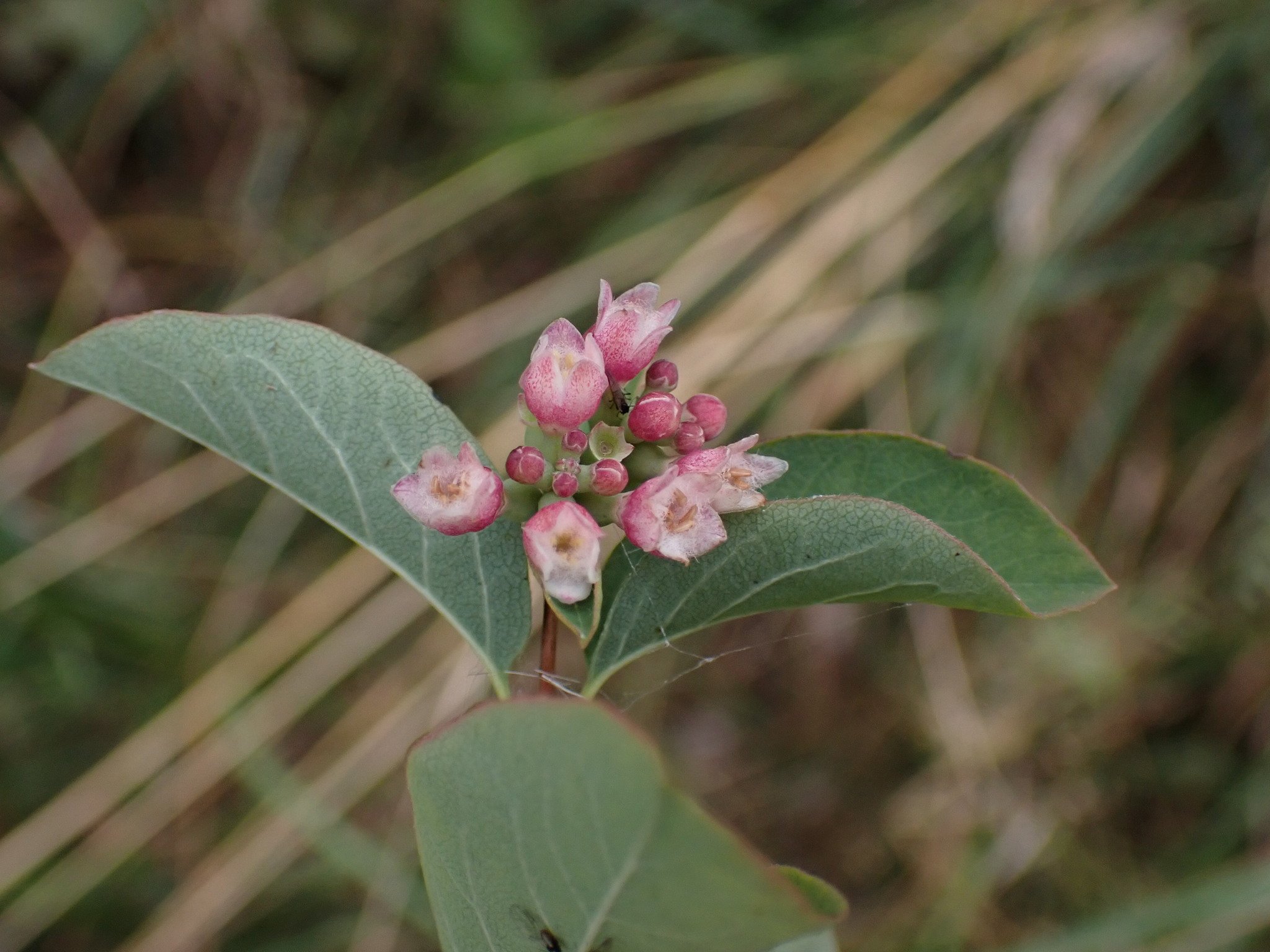
Ludwig Treuter, iNaturalist (CC BY-NC)
Beautiful and delicate pinkish-white flowers of the snowberry.
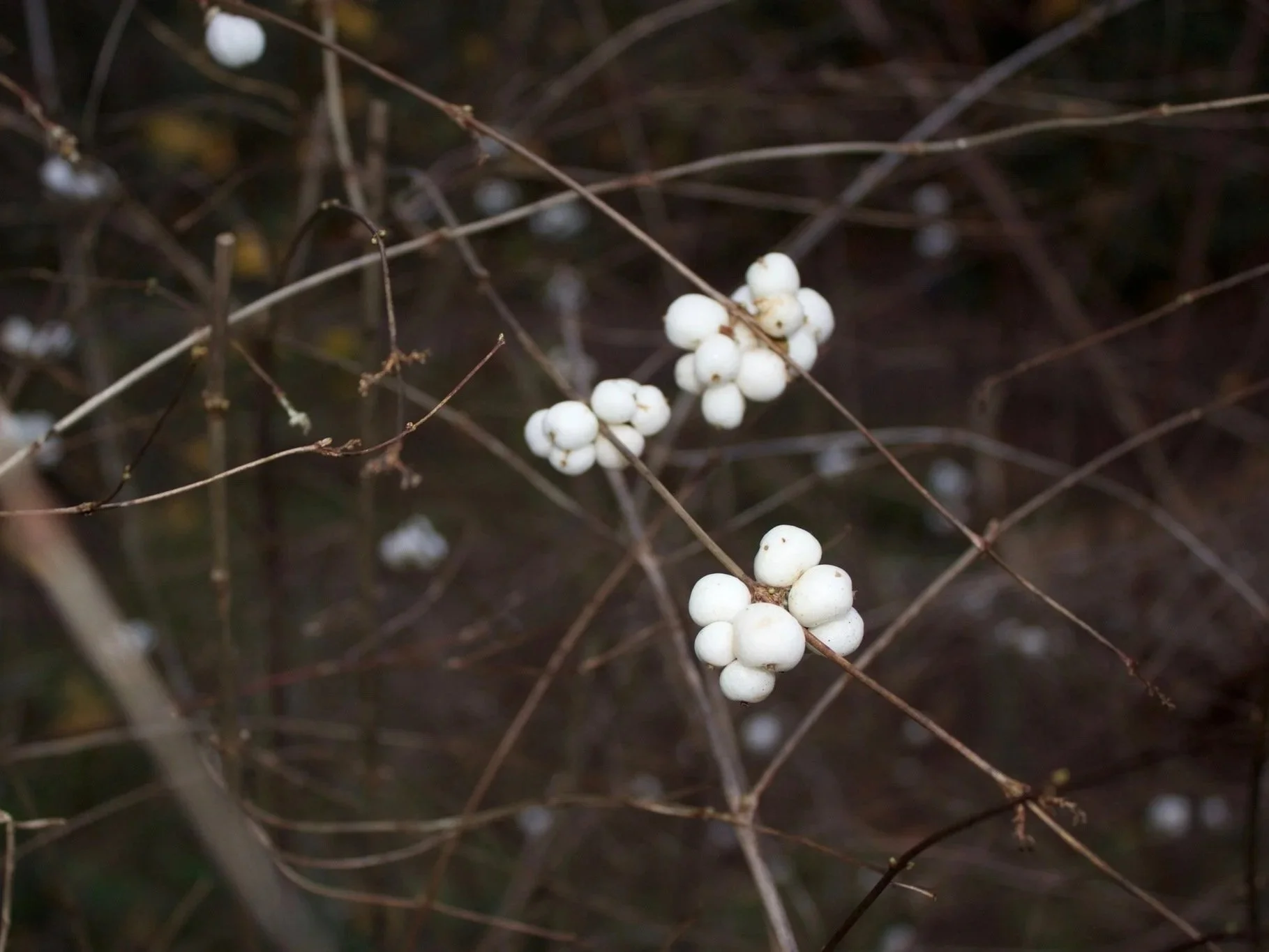
User cooksl7, iNaturalist (CC BY-NC)
Bright white berries can cling to stems after leaves have dropped.
As we move through the winter season and reflect on the year’s restoration work, snowberry reminds us that resilience often shows up in quiet forms. Its berries shine through the frost, its roots persist after fire, and its branches shelter the winter wildlife. By planting and protecting species like snowberry, we help to restore our local ecosystems, and remind ourselves that healing and connection are still very much possible, both in nature and in our communities.
Where to Find Snowberry and Other Native Plants
Snowberry is naturally found along woodland edges, stream corridors, and coastal environments across the United States. Its tolerance for sun, shade, and varied moisture levels makes it a common plant in many of our restoration projects, including Foothills Nature Preserve and Pearson-Arastradero Preserve in the Palo Alto Hills. Our nursery grows native plants like snowberry using seeds and cuttings carefully sourced from local watersheds. See our latest inventory for online sales here:
By Isabella Nishihira, California Climate Action Corps Member