
Native Plant of the Month: Hemp Dogbane
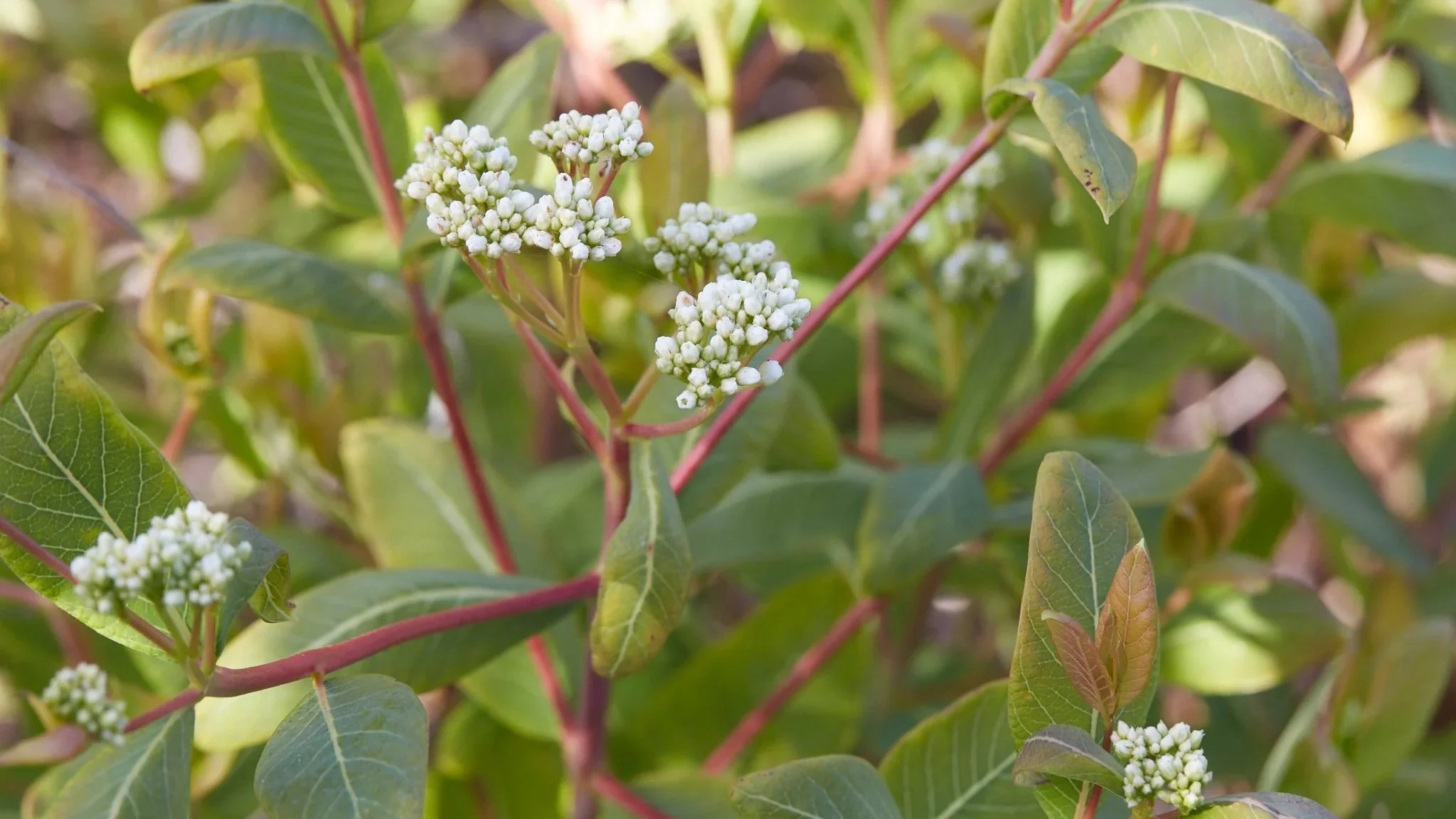
With its tenacious rhizomes and high toxicity, hemp dogbane (Apocynum cannabinum) may seem more like a weed than a welcome guest. However, people have looked to dogbanes since time immemorial to create resilient ecosystems, communities, and textiles. The Apocynum genus consists of only a few species and hybrids, but plants belonging to this genus are widespread and known for supporting the basic needs of people across cultures.
Growing Hemp Dogbane at Home
Hemp dogbane stands upright and tall in open, sunny spaces with moist soils. It often grows along streambanks and seasonal wet meadows, where it can spread easily using underground rhizomes. These rhizomes are excellent for stabilizing slopes and controlling erosion, forming subterranean networks that hold the soil in place. With striking red stems and lance-shaped leaves, dogbane is an excellent plant choice in areas where it is free to spread as it pleases.
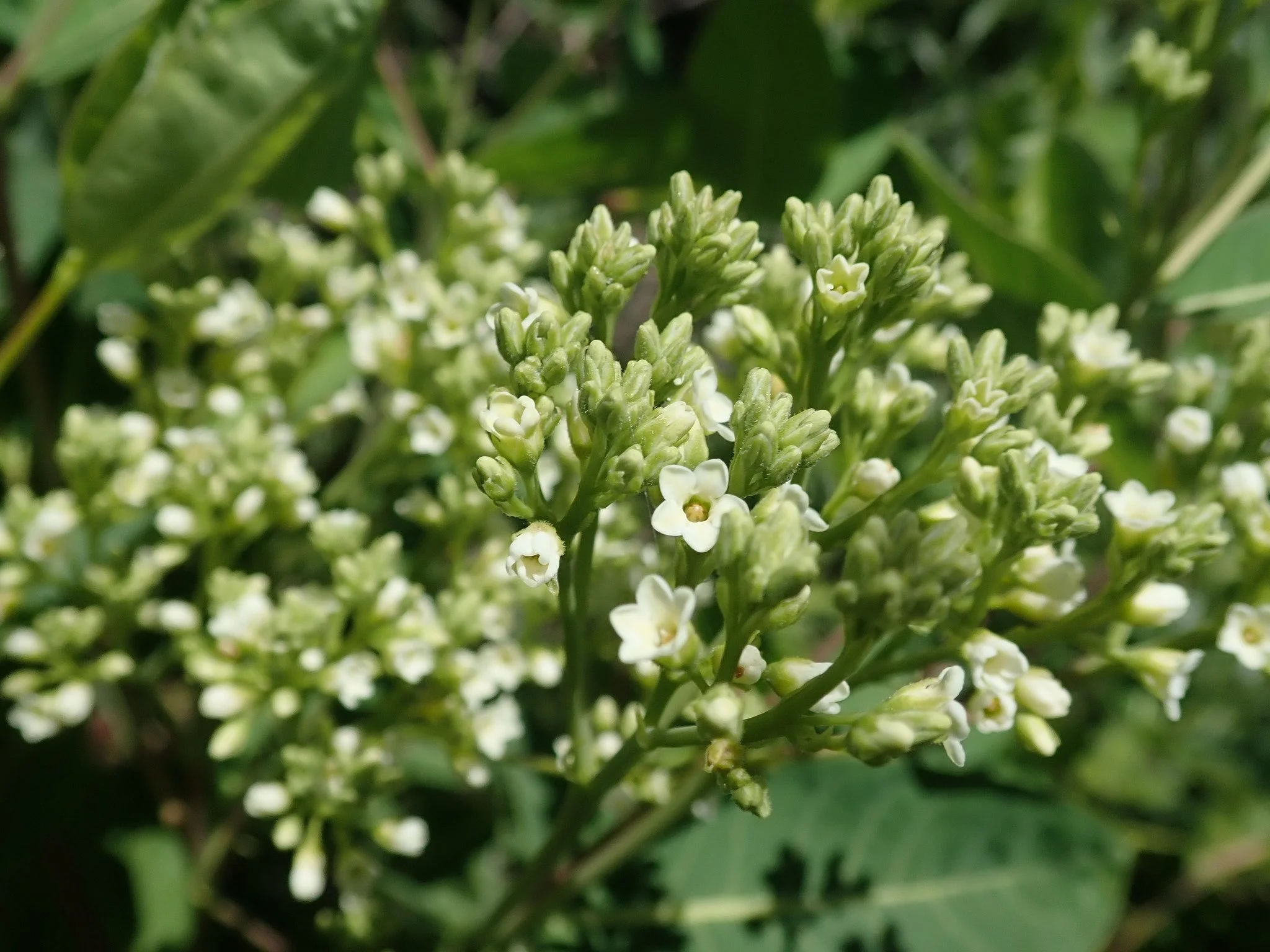
Clusters of cream-colored, nectar-rich flowers bloom in the summer to feed moths, butterflies, bats, and bees. Hemp dogbane serves as a host plant for a variety of species of moths, including the snowberry clearwing (Hemaris diffinis), dogbane tiger moth (Cycnia tenera), and zebra caterpillar (Melanchra picta). The fruit are slender and cylindrical, splitting open at maturity to reveal seeds with long silky hairs that are carried by the wind to create new stands elsewhere. Plant dogbane in pollinator gardens, rain gardens, and areas with poor drainage to attract native pollinators, control erosion, and outcompete aggressive invasive plants.
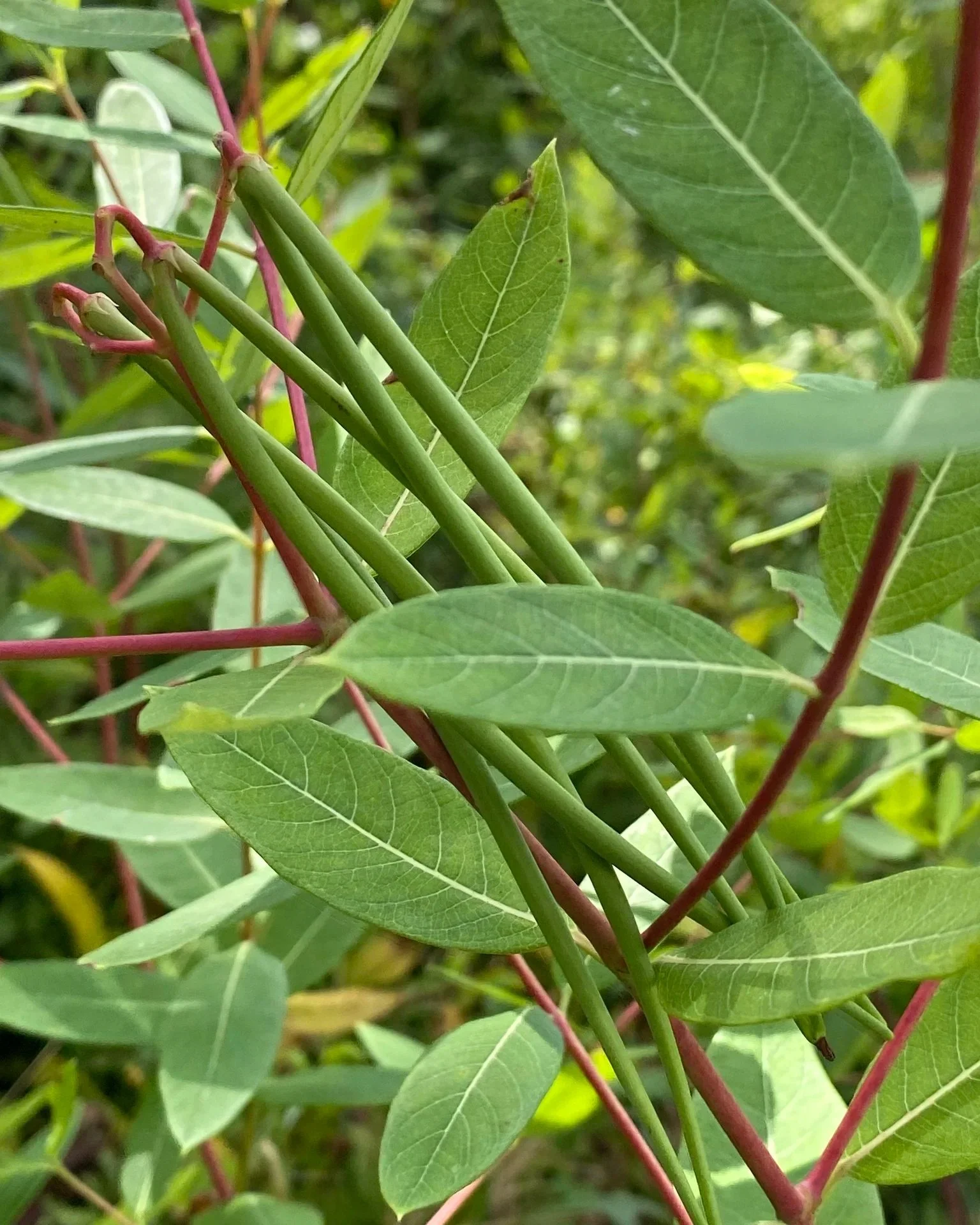
Sandy Wolkenberg, iNaturalist (CC BY)
Hemp dogbane bears long, slender fruit in the late summer and early autumn.
Medicinal and Cultural Uses
As indicated by its name, hemp dogbane is highly toxic to dogs, as well as livestock and humans. The stems contain a milky latex that is irritating to the skin when touched and all parts of the plant can be poisonous, if ingested. Despite this, people have used dogbane as an important medicinal plant across cultures. Dogbane contains cardiac glycosides, which slow the heart rate and strengthen heart muscle contractions. While an excessive dose can prove fatal, in North America, Indigenous peoples use dogbane to increase blood pressure and improve circulation. In China, Luobuma (A. venetum) leaves are steeped to make tea used to support the liver, strengthen the heart, and ease anxiety.
*Note: Do not eat or utilize wild plants unless you have confidently identified the species, harvested according to relevant laws/permissions, and prepared them according to the proper protocols.
Dogbane’s bast fibers have made it an invaluable plant to textile makers all around the world. These fibers—found in the inner bark—are uniquely strong and soft, and can be twisted into cordage or woven to create hardy cloth. The Luiseño people of Southern California use hemp dogbane for bowstrings, snares, fishing nets, and dance regalia. Tribes on the Columbia Plateau such as the Nez Perce, the Spokane, and the Kalispel, make cordage and baskets. On the other side of the world, communities in Central Asia harvest kendyr (A. venetum and A. pictum) to make cloth, fishing nets, and paper. Kendyr has risen to popularity as a sustainable alternative to cotton farming as water scarcity issues in this region have intensified. Despite coming from vastly different landscapes and lifeways, we are united by the dogbanes’ sturdy fibers and our most basic needs: food, medicine, and warmth.
Where to Find Hemp Dogbane and Other Native Plants
Hemp dogbane can be found in moist, open areas such as streambanks, fencelines, and meadows. You can find hemp dogbane growing at Filoli Historic House and Gardens in Woodside, Windy Hill Preserve in Portola Valley, and our very own restoration sites at Foothills Nature Preserve in the Palo Alto foothills. Our nursery grows hemp dogbane and other native plants from seeds and cuttings carefully sourced from local watersheds. See our latest inventory for online sales here:
By Halle Donovan, California Climate Action Corps Member
References
Thevs, N., Zerbe, S., Y. Kyosev, A. Rozi, Tang, B., N. Abdusalih, & Z. Novitskiy. (2013). Apocynum venetum L. and Apocynum pictum Schrenk (Apocynaceae) as multi-functional and multi-service plant species in Central Asia: a review on biology, ecology, and utilization. Federal Research Centre for Cultivated Plants (Julius Kühn-Institut), 85(2), 159–159. https://doi.org/10.5073/jabfq.2012.085.024
King, Brian. (2003). The Ethnobotany of the Miami Tribe: Traditional Plant Use from Historical Texts. etd.ohiolink.edu/acprod/odb_etd/ws/send_file/send?accession=muhonors1110917365&disposition=inline
Xie, W., Zhang, X., Wang, T., & Hu, J. (2012). Botany, traditional uses, phytochemistry and pharmacology of Apocynum venetum L. (Luobuma): A review. Journal of ethnopharmacology, 141(1), 1–8. https://doi.org/10.1016/j.jep.2012.02.003