Native Plant of the Month: Silverleaf Manzanita
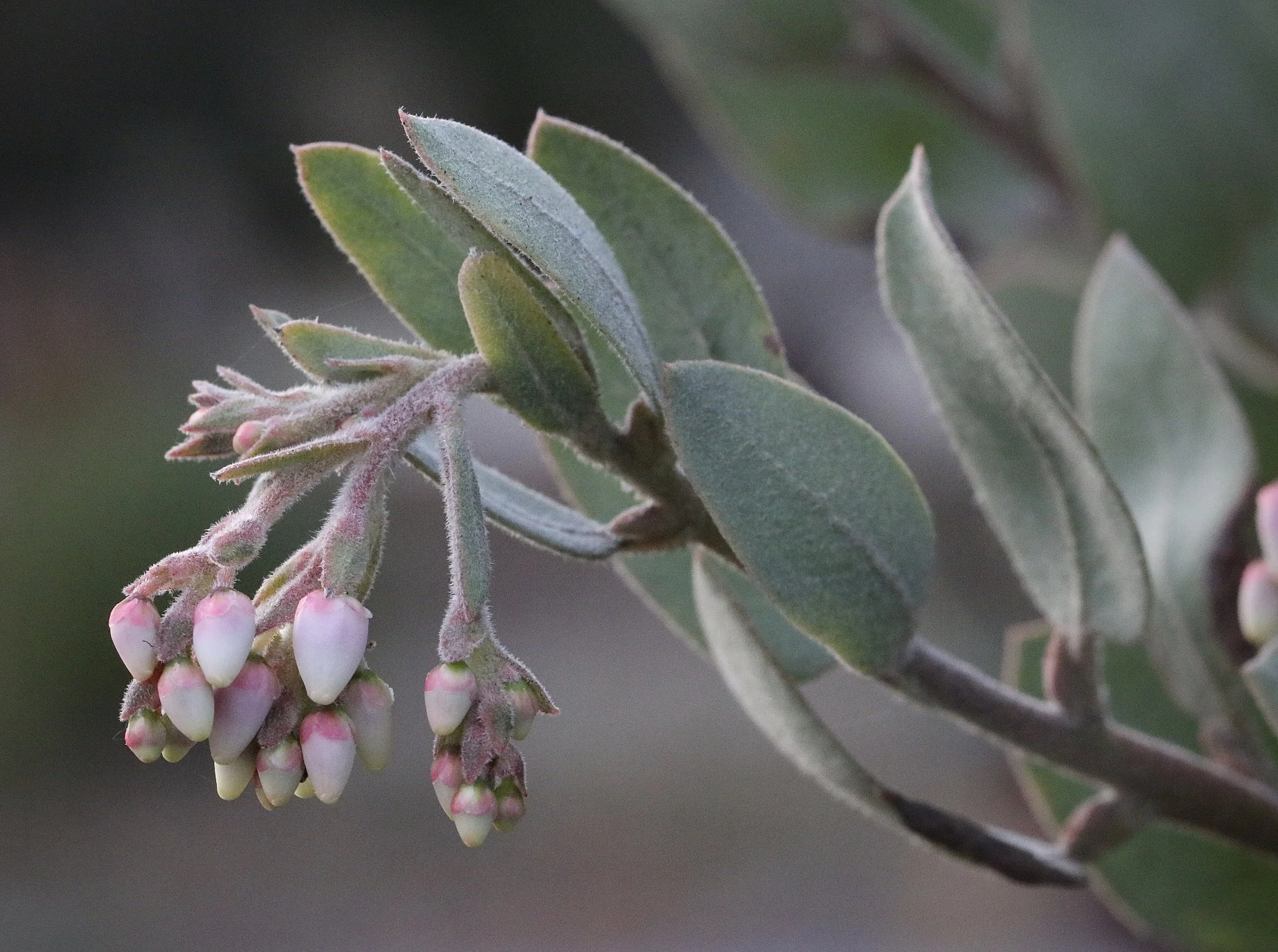
Silverleaf manzanita, also known as Bonny Doon manzanita (Arctostaphylos silvicola), only occurs naturally in the sandhills of the southern Santa Cruz Mountains in Santa Cruz and Santa Clara counties. It gets its name from its small red fruits (manzanita means “little apple” in Spanish) and its fuzzy, silver-green foliage.
Identification & Growing Silverleaf Manzanita at Home
Silverleaf manzanita is an upright to mounding evergreen shrub (with its iconic gray-green foliage, one could call it evergray) that can grow to be 3-16 ft tall. often resembling more of a tree with age. The bark is dark red, smooth, and depending on the time of the year can be peeling. The pink-to-white urn shaped flowers are held in panicles (loosely branched clusters of flowers) which have bell-shaped reflexed bracts (leaf-like structures bent backward from the flowers). The fruits are large (6-12 mm wide) and smooth with no hairs.
Every year the shrub starts to grow a new layer of bark underneath the old layer. The new bark expands as it grows, and the wood underneath is growing at the same time. This causes the whole stem to expand under the old bark and stretches it until it cracks. The dead outer layer peels and rolls up into little tubes as it dries. This process is an adaptation to rid the plant of any harmful insects, fungi, or lichen! It grows in coniferous forest and chaparral on sandy coastal slopes, and its very small geographic range should be noted. Habitat loss and degradation still threaten the persistence of this species. The silverleaf manzanita is among the most rare and endangered manzanita species according to the California National Plant Society.
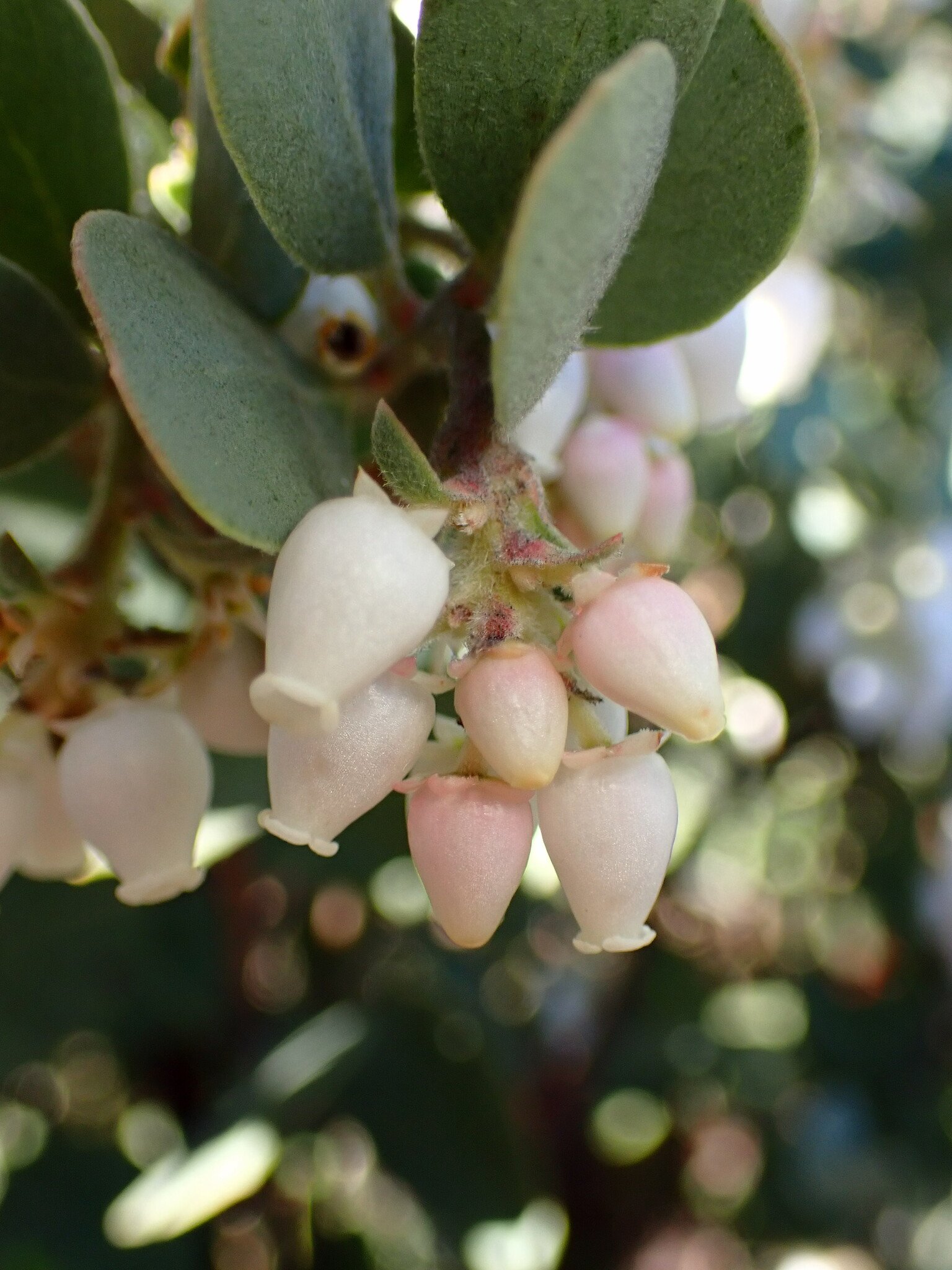
Cricket Raspet, iNaturalist (CC BY)
Cluster of soft-pink to white, urn-shaped flowers emerge between January and March.
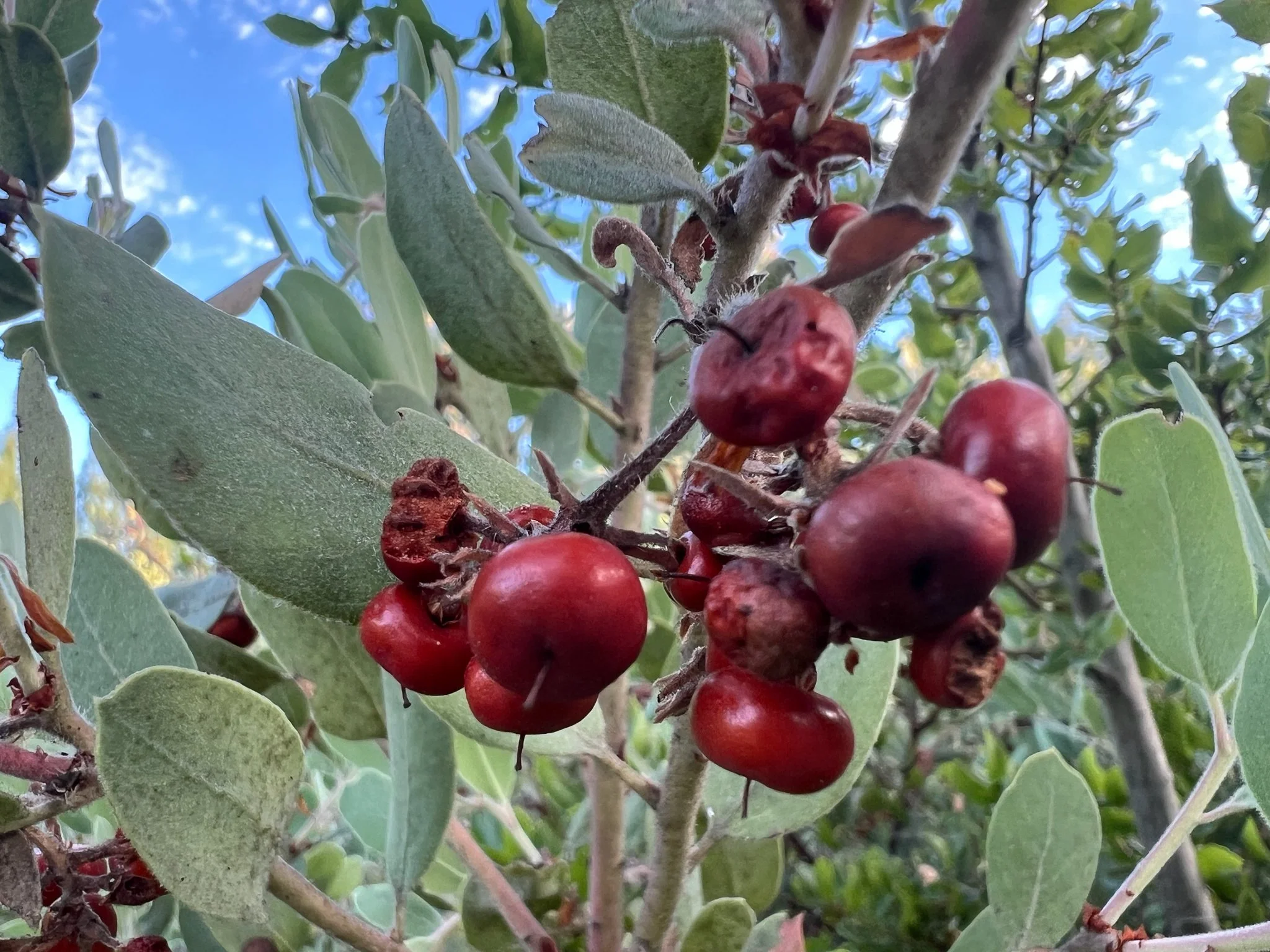
Ryan Donnelly, iNaturalist (CC BY)
Fruits appear late spring to early summer.
A. silvicola thrives in well drained soils, cold winters, and, once well established, prefers to be left dry during summer. This makes it a strong candidate for California native gardens (especially for those looking to save on water).
Benefits to Wildlife
Manzanitas are not just beautiful—they also support a wide variety of life, both in the wild and in a garden landscape. With its flowers blooming in the colder months of February and March, they provide an early source of nectar for native bees and hummingbirds. Following the flowers come its apple-like fruits that persist into late spring and summer providing an additional source of food for more birds and mammals.
Cultural Uses
California is a major center of manzanita species diversity, and as a result, native tribes across the state have been found to have many uses for various manzanita species. Interestingly enough, the uses do not change much between tribes and species of manzanita. Traditional uses of the manzanita come in the form of harvesting the fruit, then drying and pounding it to make a coarse meal made for biscuits. It was also common to make tea with the berries and tips of the branches, or even cider.
Examples of this can be seen with the pointleaf manzanita (Arctostaphylos pungens) in the Palm Springs area, where it has long been used by the Cahuilla people. Similarly, sticky whiteleaf manzanita (Arctostaphylos viscida Parry) was—and still is—highly valued by the Miwok, Wintu, and Madiu tribes. The Miwok people have found uses of the hard manzanita wood by making tools.
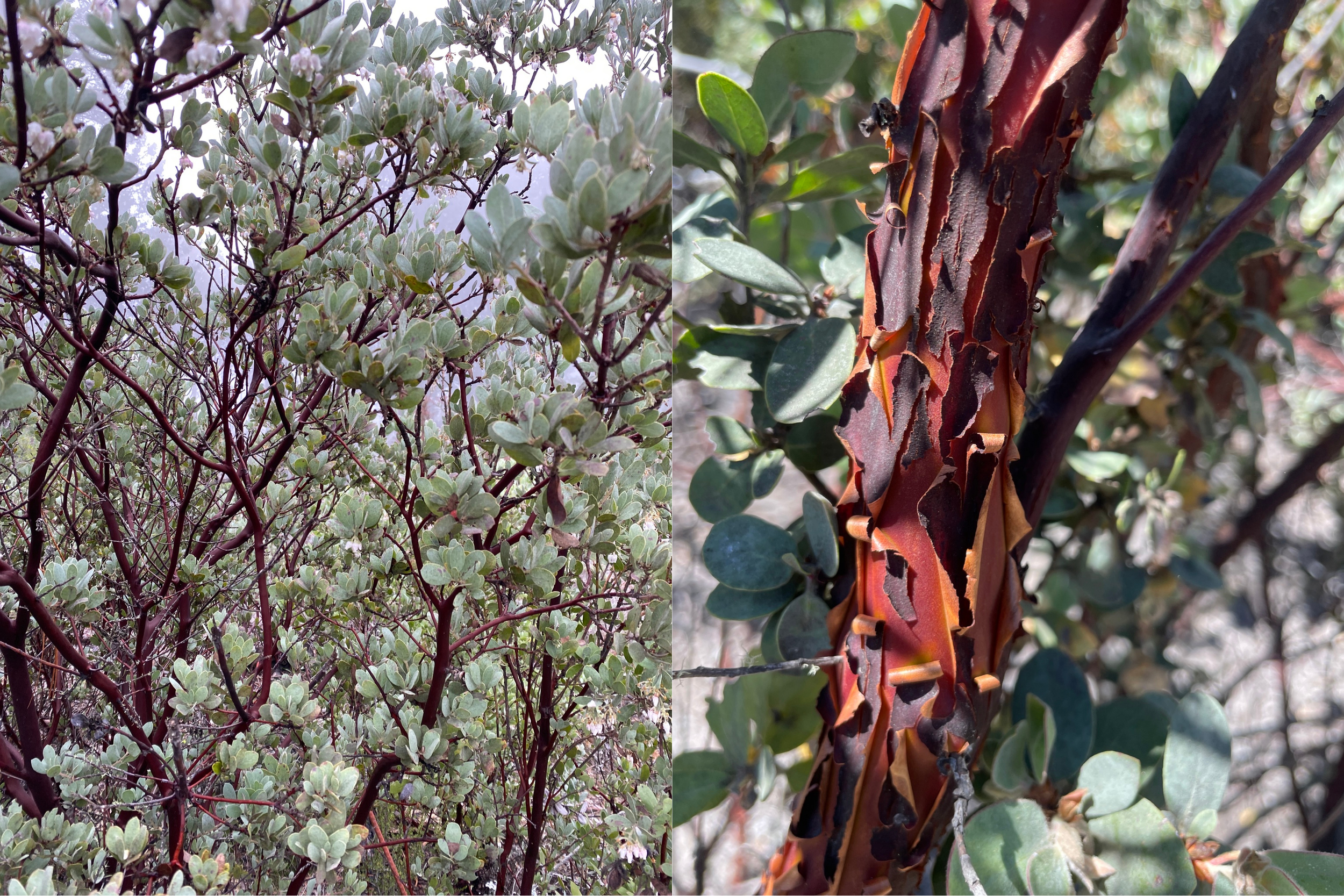
L: User migsgreenworld; R: Cricket Raspet, iNaturalist (CC BY)
Fully grown silverleaf manzanita can appear more tree-like than shrubby. Each year old bark will peel, making way for new bark.
Where to Find Silverleaf Manzanita and Other Native Plants
If you ever find yourself walking through the Southern Santa Cruz mountains, keep an eye out for the distinctive traits of silverleaf manzanita out in the wild. The Grassroots Ecology Native Plant Nursery also has silverleaf manzanitas available for purchase on our website, perfect for your very own native garden. Our nursery grows native plants including many species of manzanita using seeds and cuttings carefully sourced from local watersheds. See our latest inventory for online sales here:
By AJ Bautista, California Climate Action Corps Member