Invasive Plant of the Month: French Broom
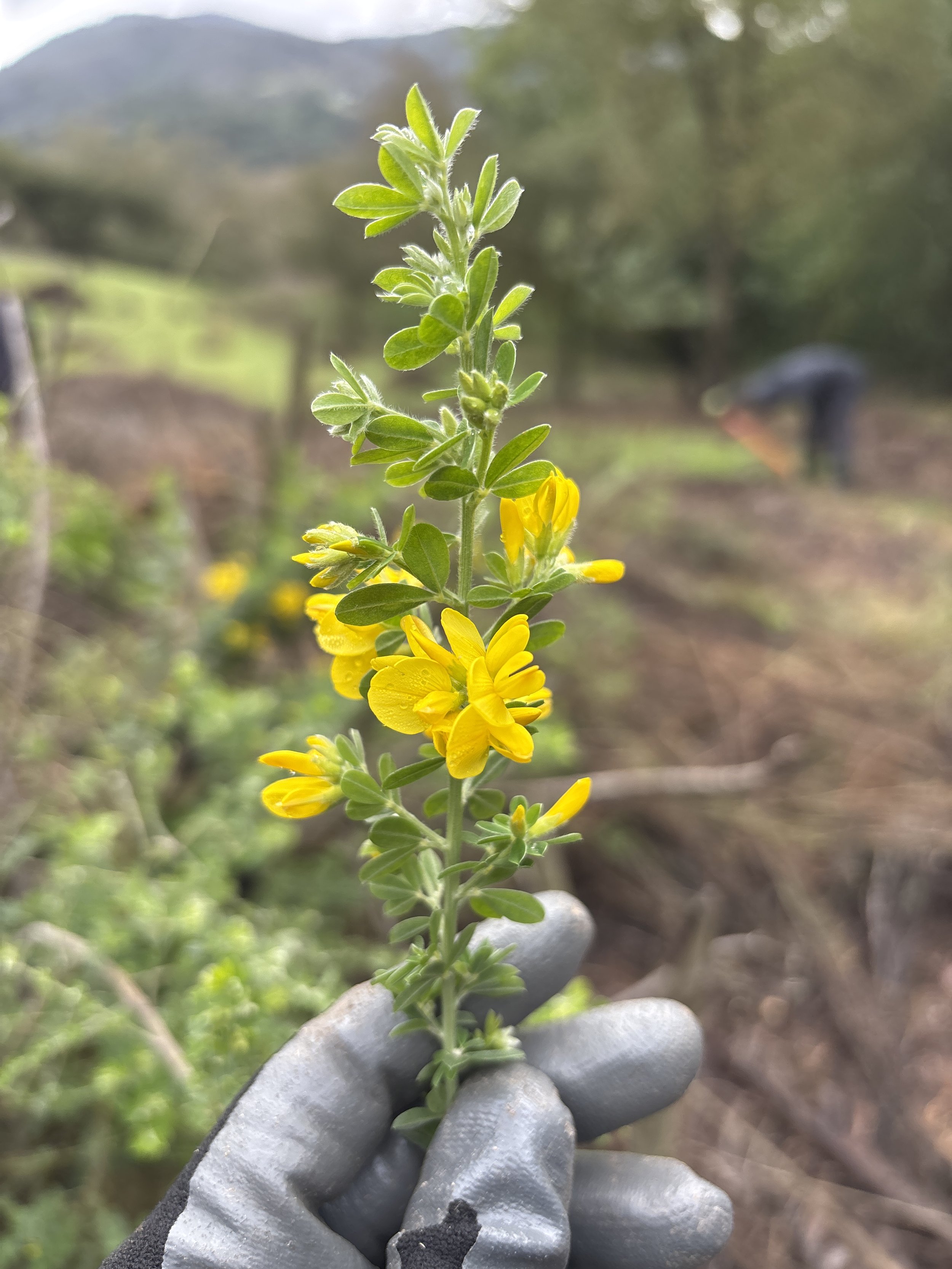
As the weather heats up in spring, sprays of bright yellow flowers pop up amidst the green shrubbery along roadsides, disturbed areas, and preserves throughout much of California. These striking yellow flowers are not California native wildflowers, but rather an invasive species known as French broom.
Ecology and Invasiveness
French broom (Genista monspessulana) is native to open woodland and scrub habitats in the Mediterranean region. Within its native range, French broom is a relatively minor player, tending to form small scattered populations in the understory of woodlands or more dense, transient populations in post-fire areas. Outside of its native habitat, however, French broom dominates plant communities, forming dense mono-specific stands. These dense stands suppress native plant growth and produce large amounts of dry material that can create a serious fire hazard. As part of the pea family (Fabaceae), French broom is able to fix nitrogen (absorbing it from the atmosphere and depositing it into the soil), allowing it to establish itself in low nitrogen environments, such as serpentine soils. This alters the natural nutrient composition, which puts native California plants (which are typically adapted to low-nutrient soils) at a massive disadvantage. The resulting loss of native plant cover has a detrimental impact on wildlife. In Golden Gate National Recreation Area, for instance, French broom is believed to be linked to a significant decrease in populations of arthropods. Most parts of French broom are also toxic to common California livestock (excluding goats) and can potentially cause digestive disorders and paralysis.
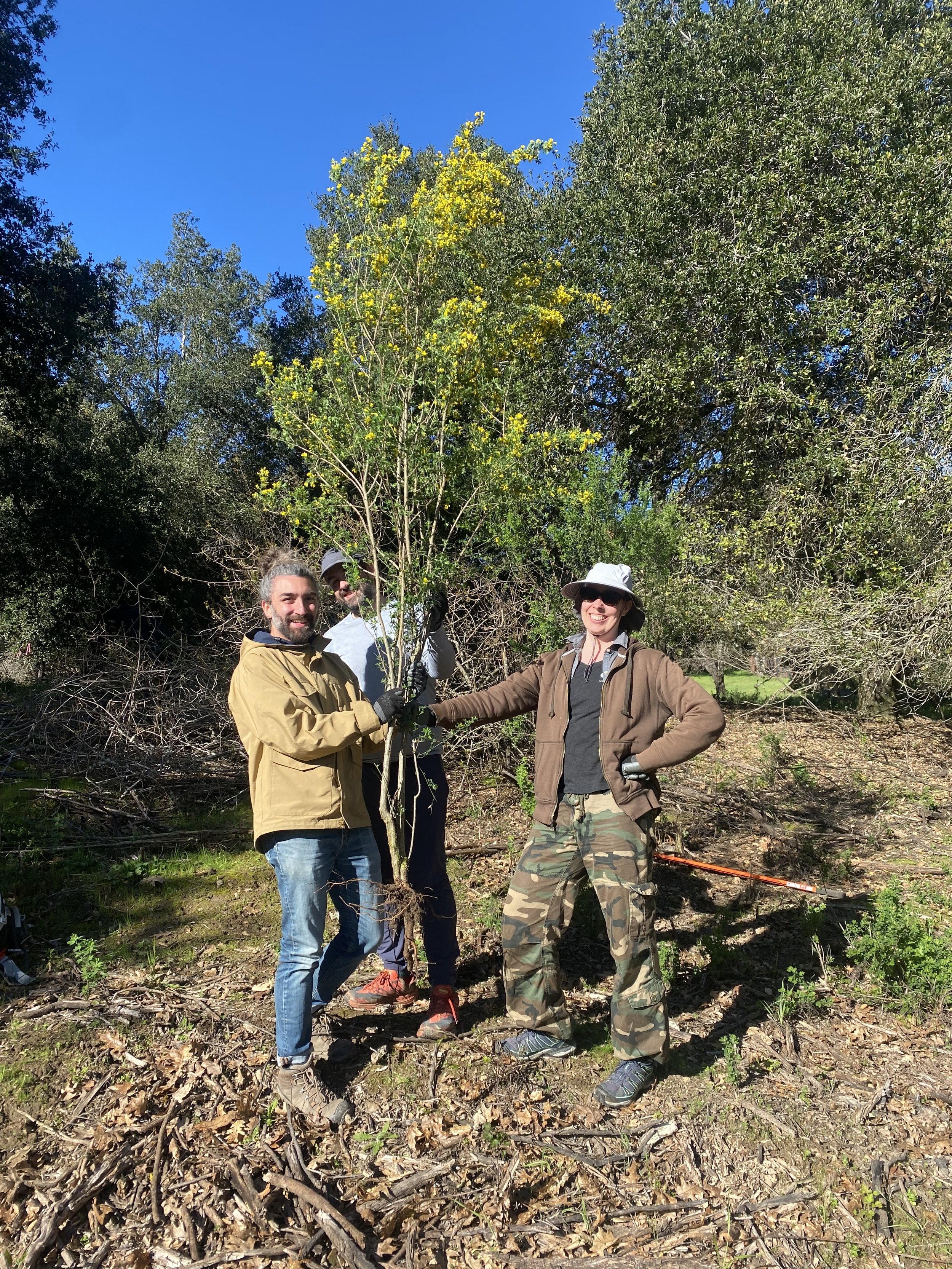
First introduced to California as an ornamental shrub via the nursery trade in the mid 19th century and later used to stabilize mine tailings and control roadside erosion, French broom spread rapidly throughout the West Coast, becoming naturalized in the state by the 1940s. It is now widespread throughout California and can be found in more than half of the counties in the state.
Identification
French broom is a perennial woody shrub generally under three meters tall. It has evergreen, small, compound leaves divided into three distinct leaflets. In the spring and early summer, bright yellow flowers cluster in groups of four to ten at the ends of branches. In mid to late summer, plants produce dark-coloured, hairy, pea-shaped pods. These pods open up explosively, hurling seeds to the ground. A single large shrub can contain up to 3,000 pods with approximately 20,000 seeds! One third to two thirds of these seeds will germinate in the first year, while the rest stay dormant and germinate at lower rates in succeeding years. The impervious seed coat on the seeds means that some can stay viable for up to 60 years, resulting in a large, long-lived seed bank that makes French broom a vexingly difficult plant species to eradicate.
Management
French broom is commonly managed through mechanical removal and/or treatment with herbicides. Common means of mechanical removal include hand pulling of younger plants and the use of tools, such as weed wrenches. Grassroots Ecology manages French broom at various preserves in the foothills of the Santa Cruz mountains, including Bear Creek Redwoods, Foothills Nature Preserve, Wunderlich County Park, Huddart County Park, Hawthorns Area of Windy Hill Preserve, and Stulsaft Park. In the winter and spring months, Grassroots Ecology staff, with the help of dozens of volunteers, scout preserves removing French broom with weed wrenches.
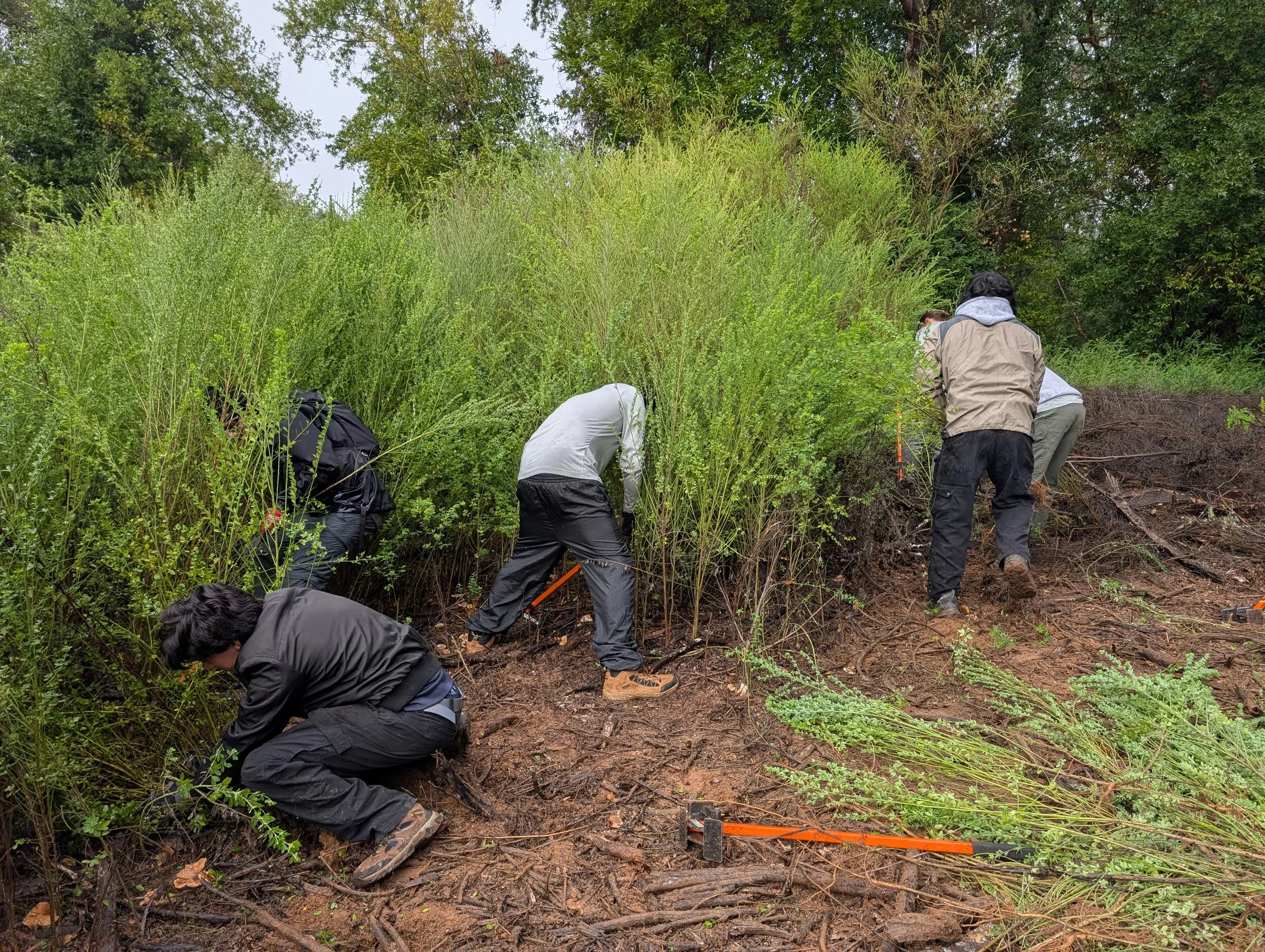
If you are interested in contributing to our management efforts and helping steward local preserves, keep an eye out on the events page for future broom pulls!
By Fiona McMahon, Watershed Stewards Program Corpsmember