A Native Garden Timeline
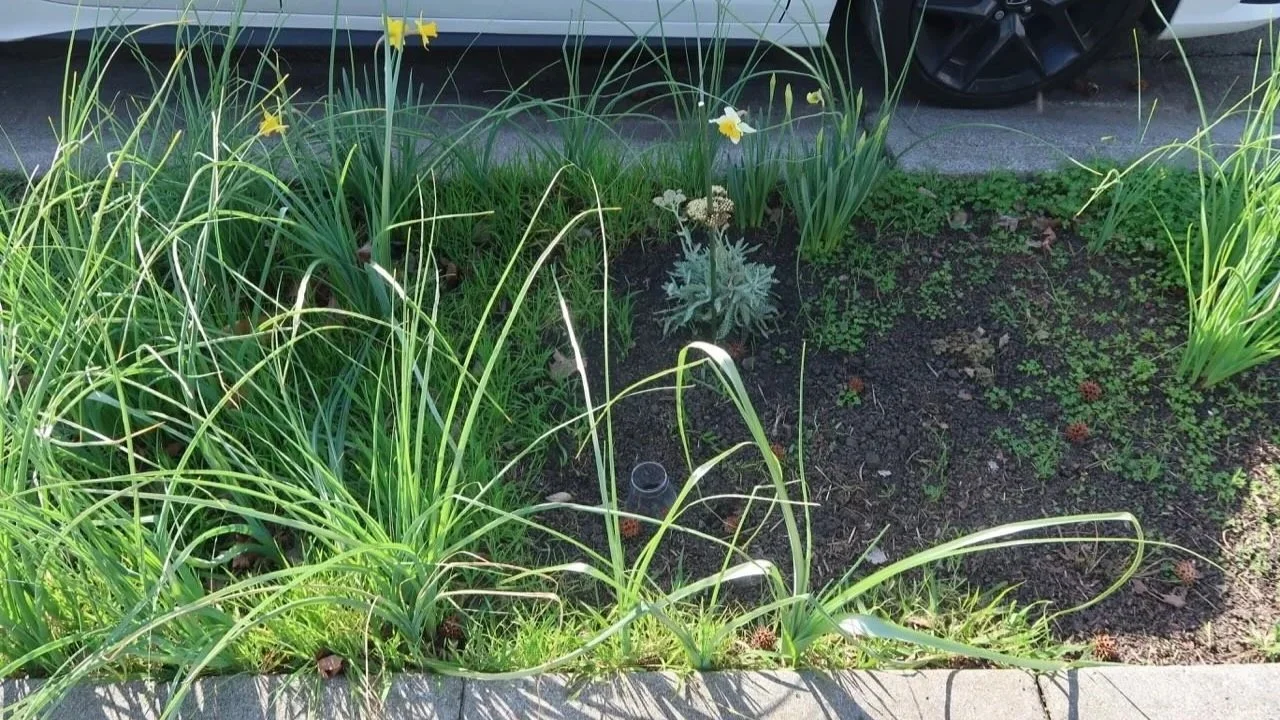
Since I started working as an intern at Grassroots Ecology, I have been inspired to apply knowledge from fieldwork and community volunteer events at home. I started to weed out invasives in my own garden naturally. After buying a lavender plant, I thought to myself, it would be great to have some native plants here. It would bring me a lot of joy to help pollinators, even with just a few plants. I decided to plan for more native plants in front of my home.
I recognize that people like myself probably have a lot of non-native plants we selected based on aesthetics in our own gardens. How great would it be to mix in some native plants to bring ecological value to pollinators and birds, or provide fire resistance? I knew I wanted to pursue this passion project to bring the biodiversity I see from my job to my own yard.
To begin planning a garden area, you first need to consider the conditions of the environment: whether it receives a lot of sun, shade, or precipitation. Then, prioritize what you want out of your garden. How often do you want to maintain it? Do you want to attract birds or pollinators? Are fire-wise plants important to you? I utilized Calscape’s Bay Area Garden Planner, which includes custom options for your county, environmental conditions, and inspiration to build your native garden. Knowing which plants are native to your county is important for them to thrive and for maintaining the natural biodiversity of ecosystems. The winter season is the perfect time to plant, giving them the best chance to develop their roots during the rainy season.
Below are my notes from the first seasons of my native garden, November 2025 through May 2026, from adding native seeds and transplanting plants, to solving unexpected problems and altering my plans.
First Steps & Planning My Garden
For my garden, I wanted wildflowers in my walkway, as well as native plants. Within the layout of my garden, I have three sections to work with: the walkway (which receives full sun), the side of the road (full sun), and lastly the side of the driveway (partial sun). I decided I did want to obtain several different species to pull together more diversity in the garden. However, if you want a more economical approach, you can choose rhizomatous native plants, such as California soaproot and common yarrow.
I picked up leaves on top of the planting areas and moved them to the grass instead of composting, since they contain natural microorganisms that help the soil. I made a plan to weed out invasive sourgrass almost weekly to give my plants and seedlings a better chance to grow. Through weeding and clearing out space, I rediscovered plants that are still growing underneath the invasive plants I had (sourgrass, nasturtium, occasionally thistles, grasses, and bindweed).
Based on my customized Calscape regional garden planner in Alameda County, the goal of my garden is to attract pollinators and birds while maintaining a relatively easy maintenance schedule. In early mornings, the air is cold, and there is light to medium frost during winter and spring. Since I live a couple of miles from the coast, there is a lot of moisture. Most of the garden receives up to six hours of sun on a sunny day; the soil is best described as silt loamy (can be dry sometimes). I got my plants from local East Bay nurseries. Calscape has a great search engine for nurseries around you, and of course, I recommend the Grassroots Ecology Nursery in Foothills for a vast selection of native plants.
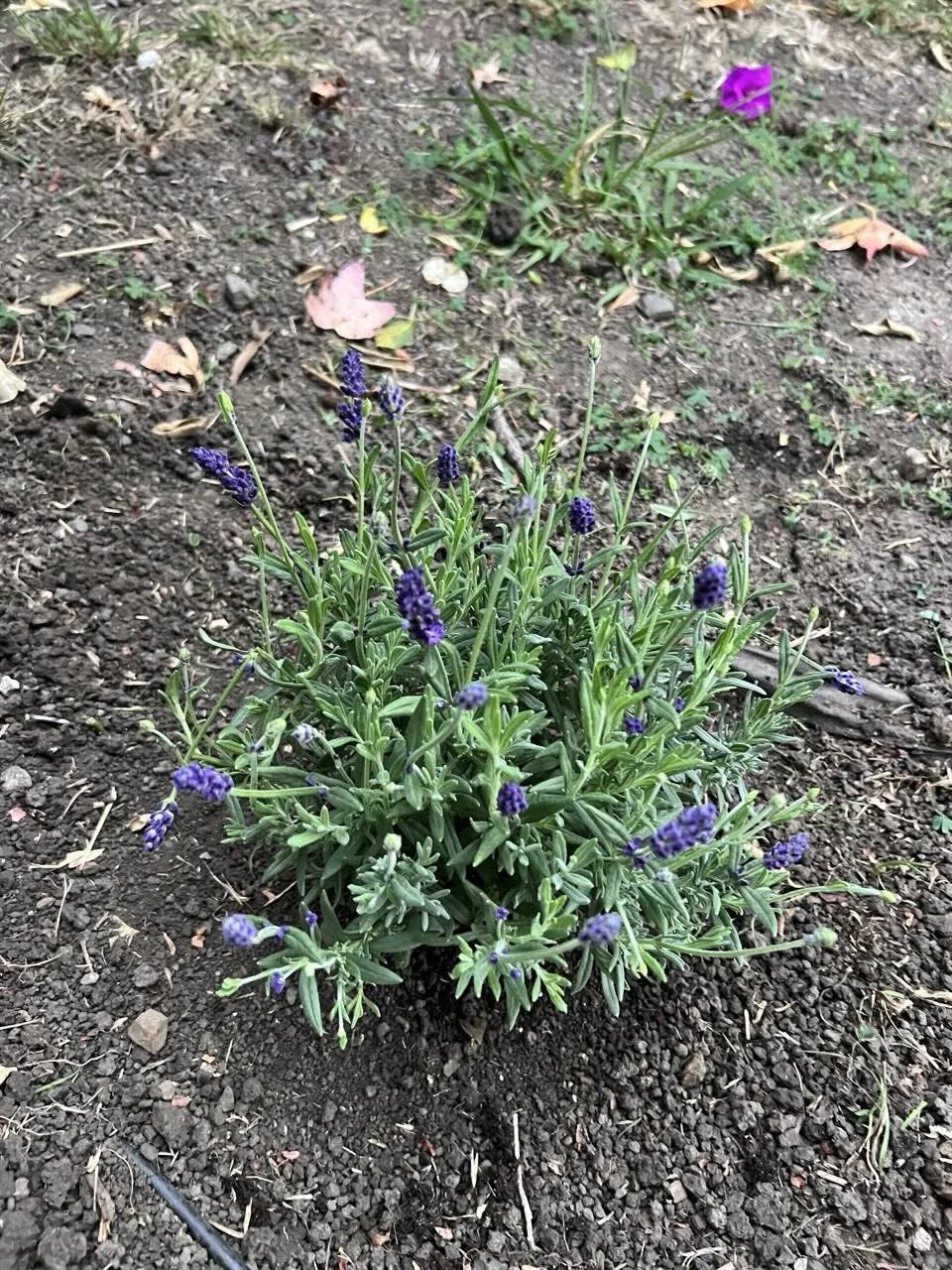
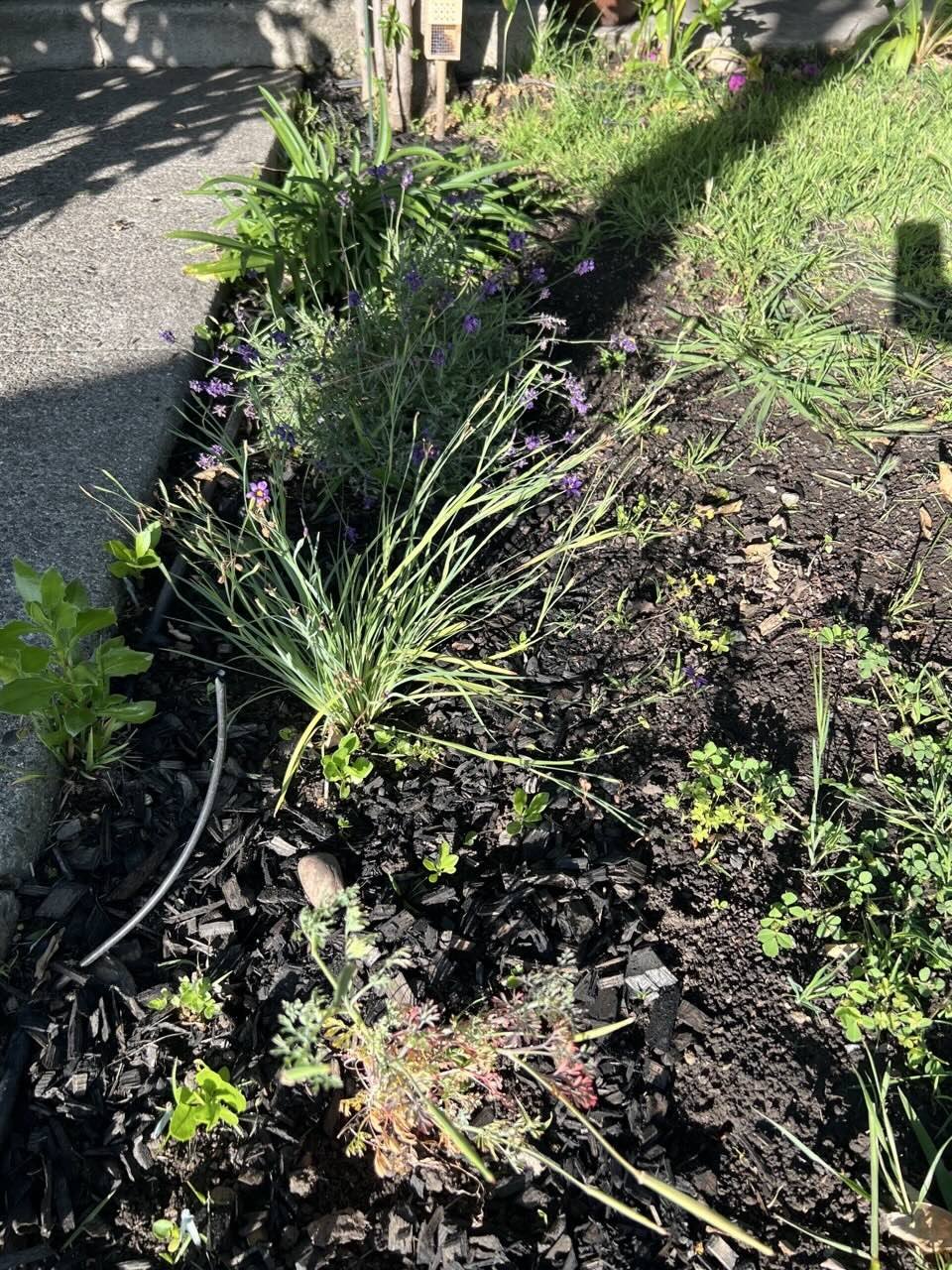
November 10-20, 2025 Planted Avignon Early Blue lavender in the walkway & did weeding work. Researched which wildflower seeds to plant and the bloom process. I made a visual layout on my iPad to organize where I want my ideal native plants in my garden. I did research on which natives I want.
The plants you select should depend on what you want to attract. With more native plant diversity, you have more specialized insects, and with more insects, you attract more birds. According to the National Wildlife Federation Blog, many native bees need 40 percent of the pollen they feed their offspring to be from native plants. Some birds need at least 70 percent of the plant species in their habitat to be native to raise their young.
Although it would be great to have a 100 percent native garden, that is a high standard to achieve, given the cost and time. Even if some of your plants are non-native (as long as they are not invasive or otherwise harmful to the environment), your garden can provide a positive impact by bringing in wildlife or being fire resilient. Aiming for 50 percent native is a realistic approach, since it can be far more harmful to get rid of all of your non-native plants.
Planting Seeds & (More) Weeding
December 9, 2025 Went to a local nursery, Evergreen Nursery, to get wildflower seeds and to view their native plant selection. I got blue-eyed grass and planted it next to the lavender. I did some weeding in the roadside.
January 1-10, 2026 Constant weeding (3 seedlings counted, Avignon Early Blue lavender spreading/growth). It was difficult to see the difference sometimes between the seedlings and the sourgrass. I researched growing wildflowers and found out it is not as simple as I initially thought; it may take a few years for thriving growth. It was a process of trial and error to see if the seeds ended up turning into seedlings. Birds might eat the seeds, the wind may blow them away, or the seeds may not be at the depth required for them to grow.
Weeding every week or every two weeks has been the most challenging. Sourgrass regrows frequently, especially after days of rainfall. Cardboard can be used for weed suppression; however, since I was planting wildflowers in the same area, I would not be able to cover the whole area in cardboard. I planned to replace some of the old mulch in the future. I have thought about coffee grounds since I remembered it could be used for certain fruit shrubs, but it is not great for seedlings because it might be too acidic. But I did add a bit to deter cats from using this spot as their litter box (it happened twice in the same spot).
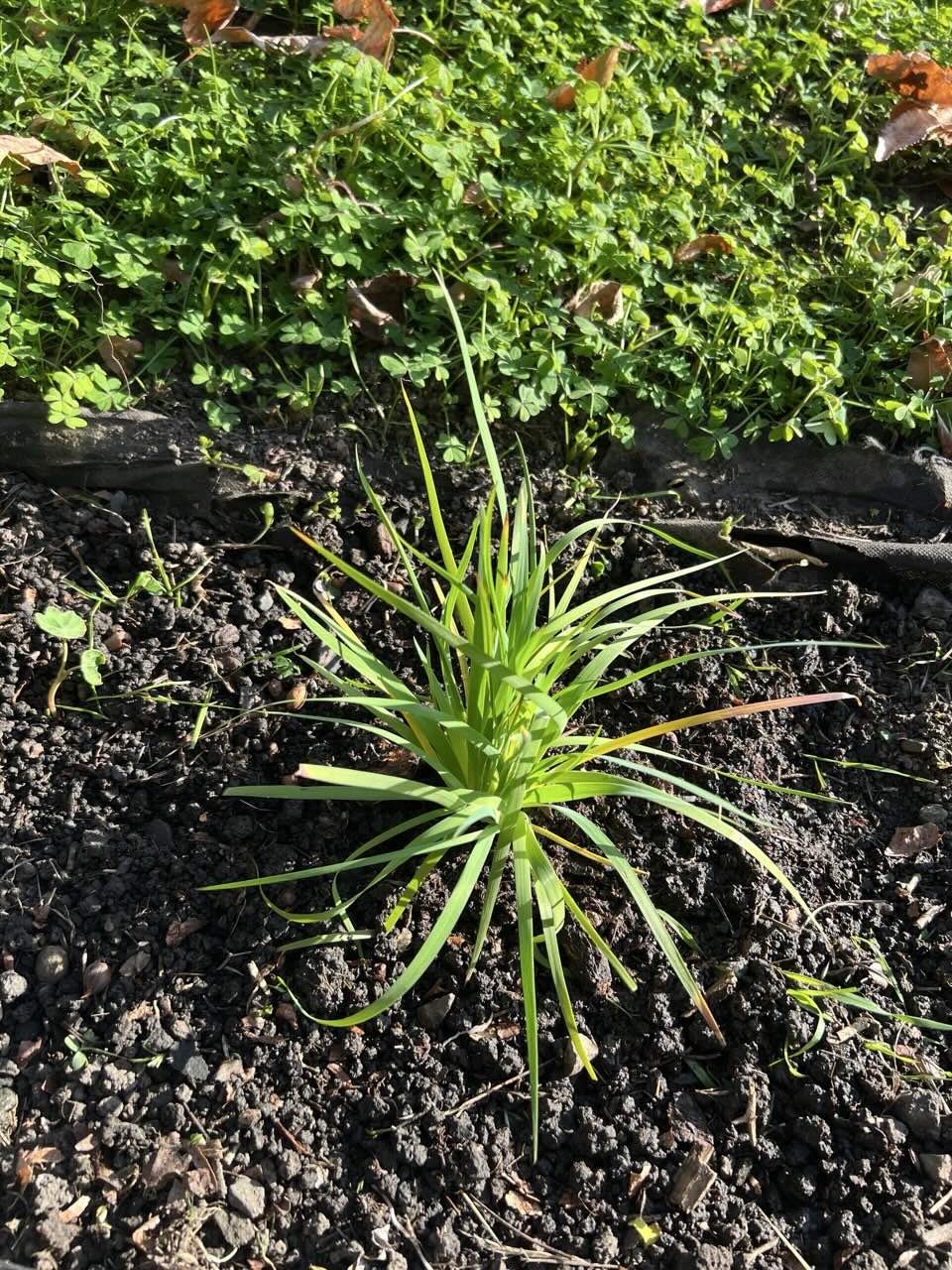
While weeding, my mind began to drift, and I realized how many interactions I found within nature that we don’t tend to think about on a day-to-day basis, whether it was a cat finding this place as nature’s own litter box, a squirrel hiding its nuts under the African lilies, or a moth finding shelter. Local organisms appreciate the plants around them. It makes a big difference to them, even if it seems small to us.
January 23, 2026 I counted 4-5 seedlings. I am not sure why the wildflowers are not growing. It could be due to the lack of rain. I only see seedlings from the wildflower mix, but not the poppy seeds. I decided to keep that seedling area clear and see how the growth progresses in the upcoming months. It will be a trial-and-error test plot.
February 2, 2026 My pollinator wooden house and water station from Etsy arrived in the mail. I was excited to put it in the garden so pollinators can make themselves at home.
February 3, 2026 I counted 21-23 seedlings!! I am happy to see them sprout.
February 5, 2026 Bought the last few plant additions from another nursery, Down by the Bay. I did a lot of weeding by the driveway.
February 6, 2026 I had one Bougainvillea that never regrew its branches in the past two seasons. I had to trim it down and have the majority of it removed.
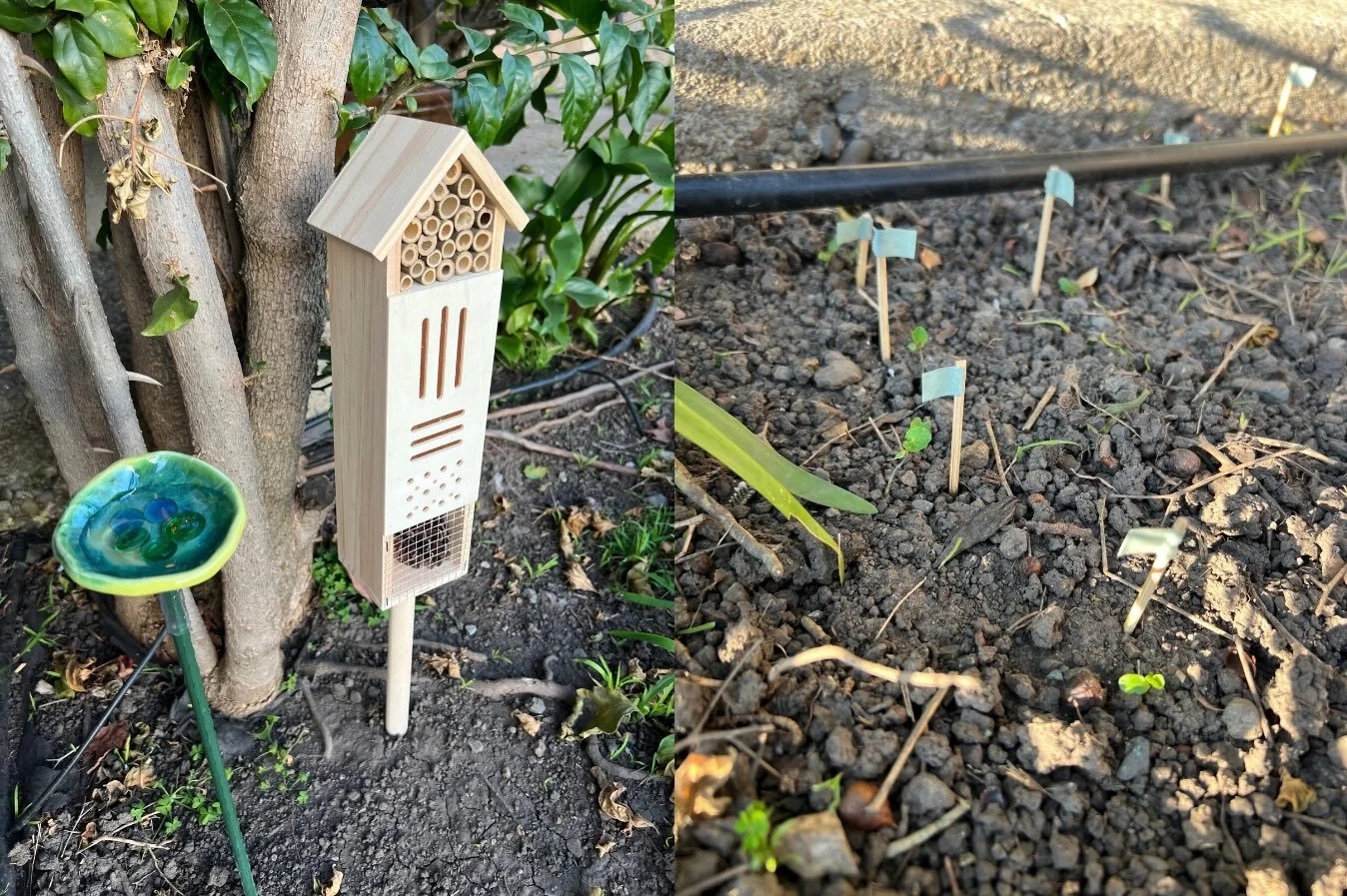
I bought a few tools and supplies I needed, such as loppers, pruners, and black mulch to replace the old mulch around the garden. I finished planting the last of my native plants: California buttercup, foothill penstemon, and coyote mint.
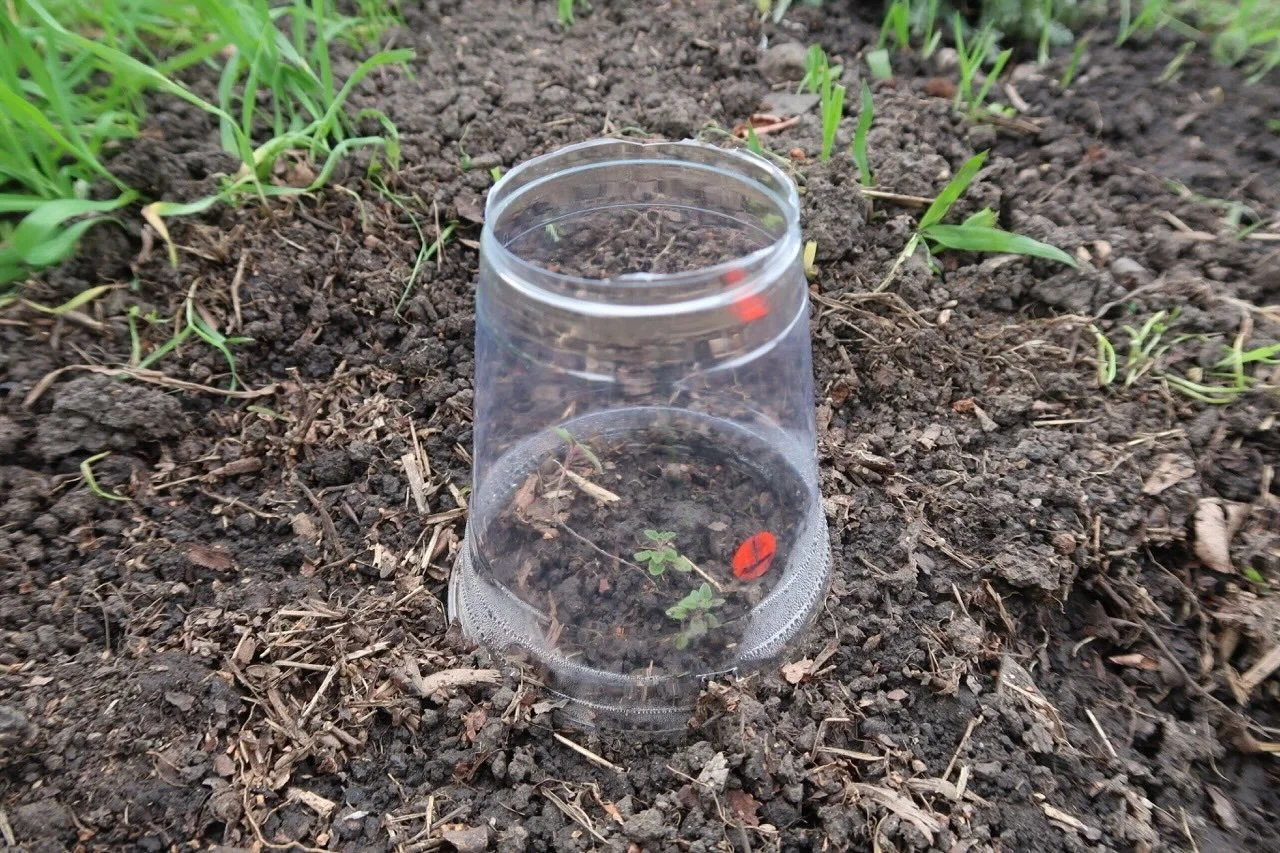
While planting the buttercup, I realized there were more large wildflower seedlings, which was great to see. Since my coyote mint is small, I did not want to risk any birds or stray cats eating it. I did not have any chicken wire to build a cage for it; instead, I used a plastic cup as my make-shift barrier.
I cut a hole at the top, made a hole near the bottom, and put a staple through it to make sure it would not be blown away. I made sure to water all small plants weekly to give them a good start and help their roots grow.
February 13, 2026 After a couple of days of rain, I checked in on my plants and seedlings. I noticed a few days before the rain that there were more seedings unmarked on the right side of the walkway. I did a recount of the marked ones—so far, I’ve lost 2 seedlings, possibly due to rain. The total count, including new seedlings, was 44, with one unidentified and one poppy sprout.
February 14, 2026 Cat feces once again, for the fourth time in the walkway. My blue-eyed grass bloomed!! One flower opened up. Can’t wait to see the rest of my plants grow. I went to the grand opening of an East Bay nursery, Down by the Bay Nursery, and unexpectedly bought three more plants because I was able to see the whole stock of native plants (rare for this nursery, which usually only allows orders for pick up). I bought common yarrow, baby blue eyes, and the most beautiful jewelflower. I think it would be nice to have a white yarrow next to the golden yarrow. Most beautiful jewelflower is an endangered plant native to the SF Bay Area and coastal regions of California. It feels special to have a plant like this in a garden as a reminder that we are a part of a change, no matter how small it is.
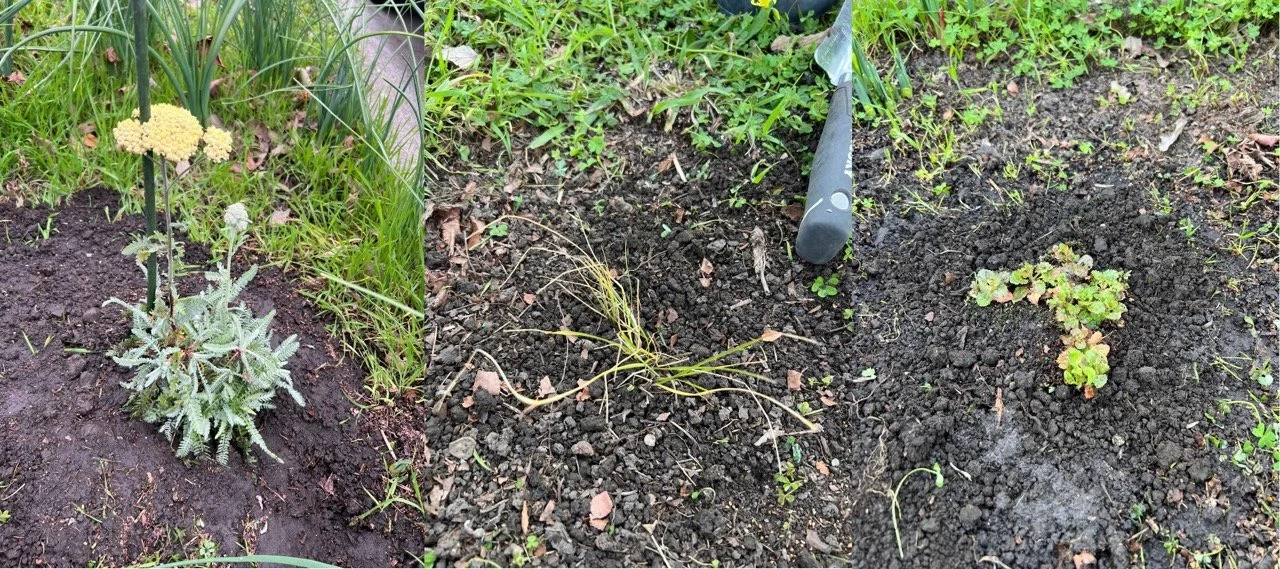
Yellow yarrow cultivar, foothill needlegrass, and seep monkeyflower.
February 21, 2026 I planted the common yarrow, most beautiful jewelflower, and baby blue eyes. I weeded out the grass from the daffodils in the roadside.
February 22, 2026 Sadly, the jewelflower I planted dried up due to the heat. Hopefully, the roots are okay once the rain comes again. I usually water my plants when I plant, but since the rain was only two days away, I did not. I learned my lesson to water at least a little bit to assist the plant with the shock of a new environment.
February 28, 2026 Plants by the driveway, penstemon, and baby blue eyes are drying out, maybe due to full sun. I watered more frequently. Sadly, my jewelflower dried out completely in the roadside. There has been an extreme shift of hot and cold weather for the past week. I will add water to the dried-out plants every day to prevent them from drying out completely.
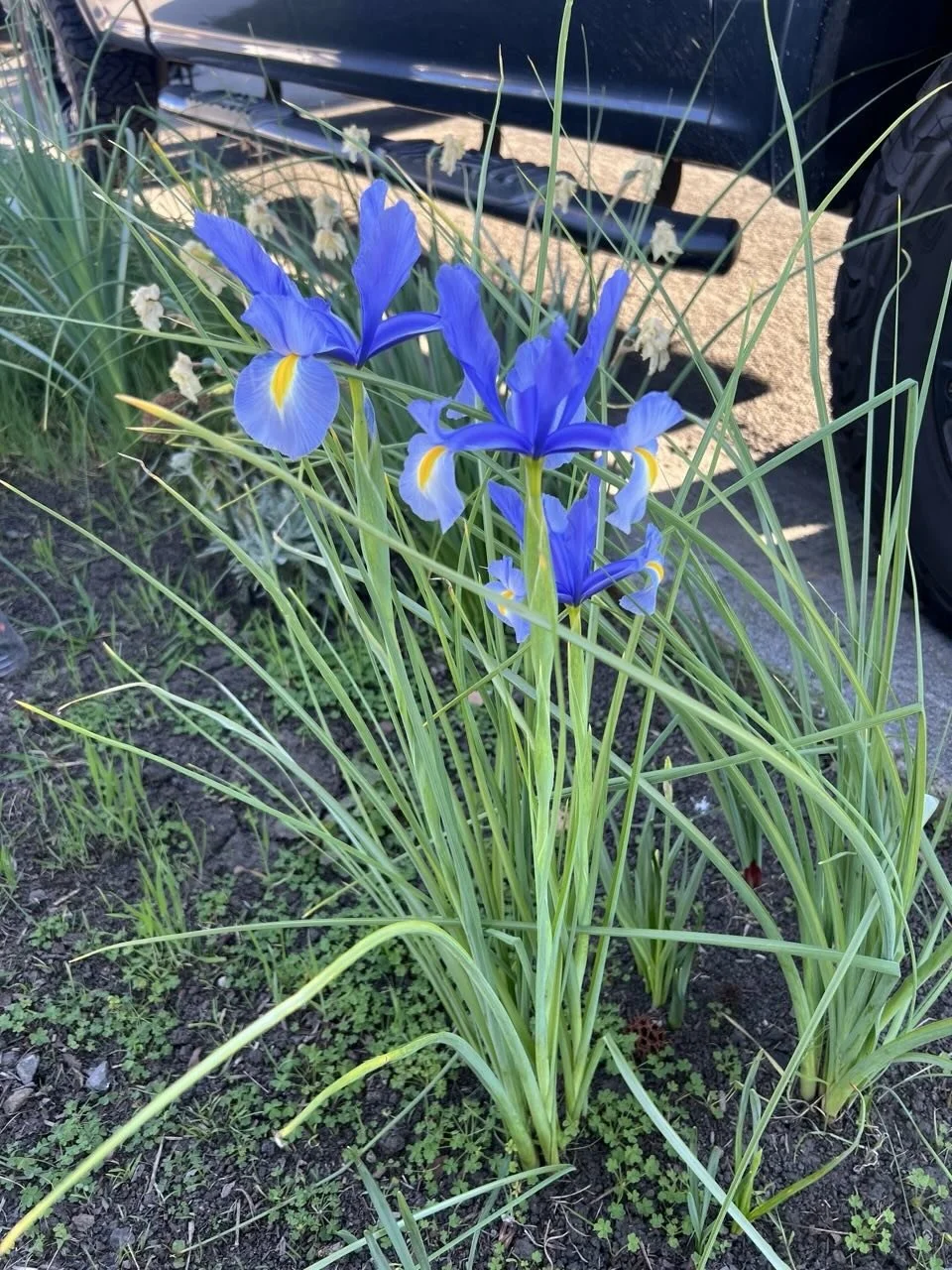
March 7, 2026 Douglas iris, one of the plants I previously had, bloomed! A perk of having them is that they come back every year.
March 10, 2026 I bought a small tin garden sign that says “What can I do?”, which explains that adding natives can have an impact. Now every time someone walks by, they can read it and hopefully be inspired to look into resources such as Seek or iNaturalist, in addition to finding native plants locally. The poppy sprout got bigger! Douglas irises continued to bloom. By the driveway, several nasturtium sprouts were growing, and I weeded them out.
March 13, 2026 I transplanted the baby blue eyes and penstemon into pots and took them indoors in hopes of recovering them. I believe the heat was too much of a shock for them to adapt.
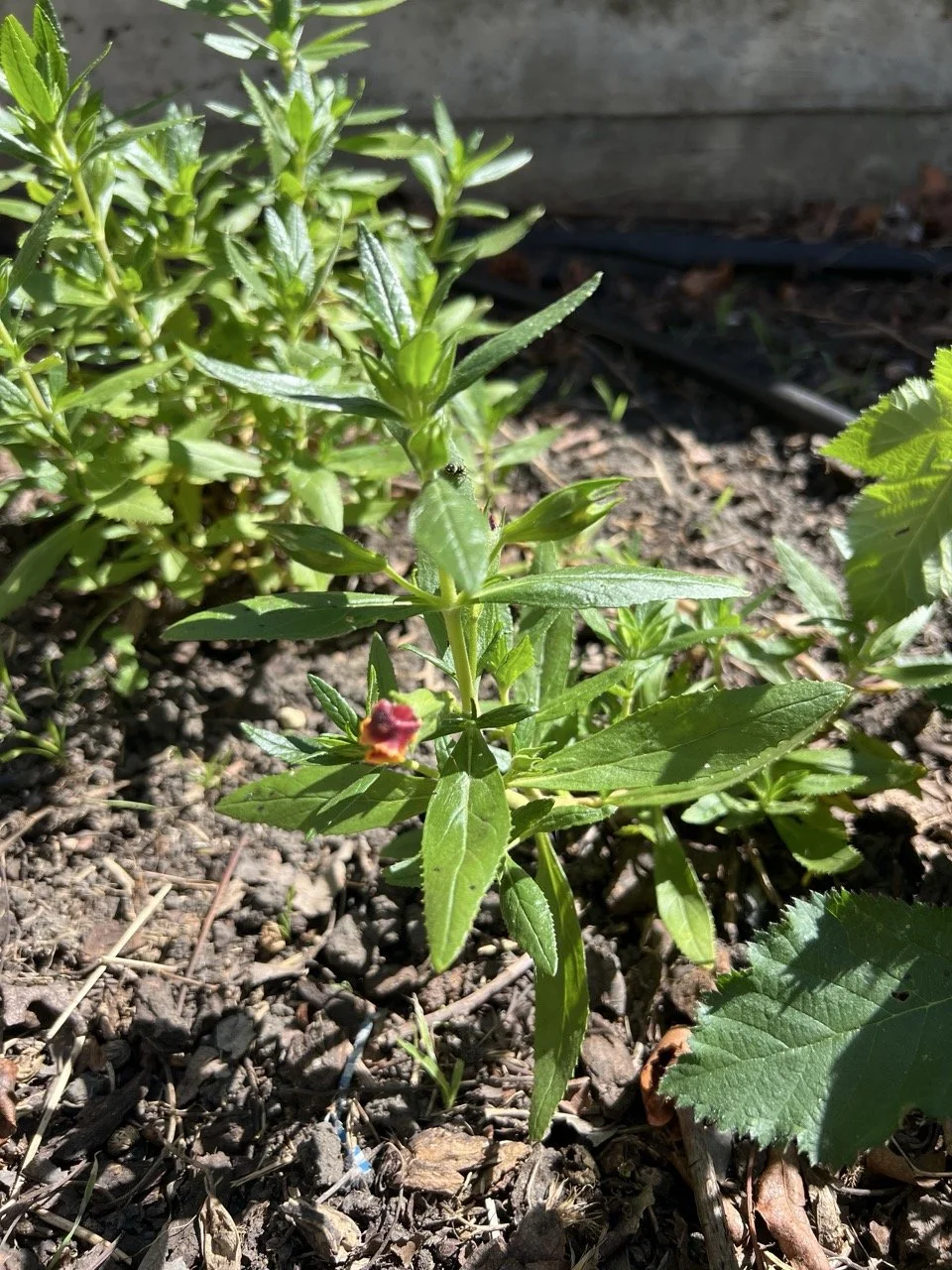
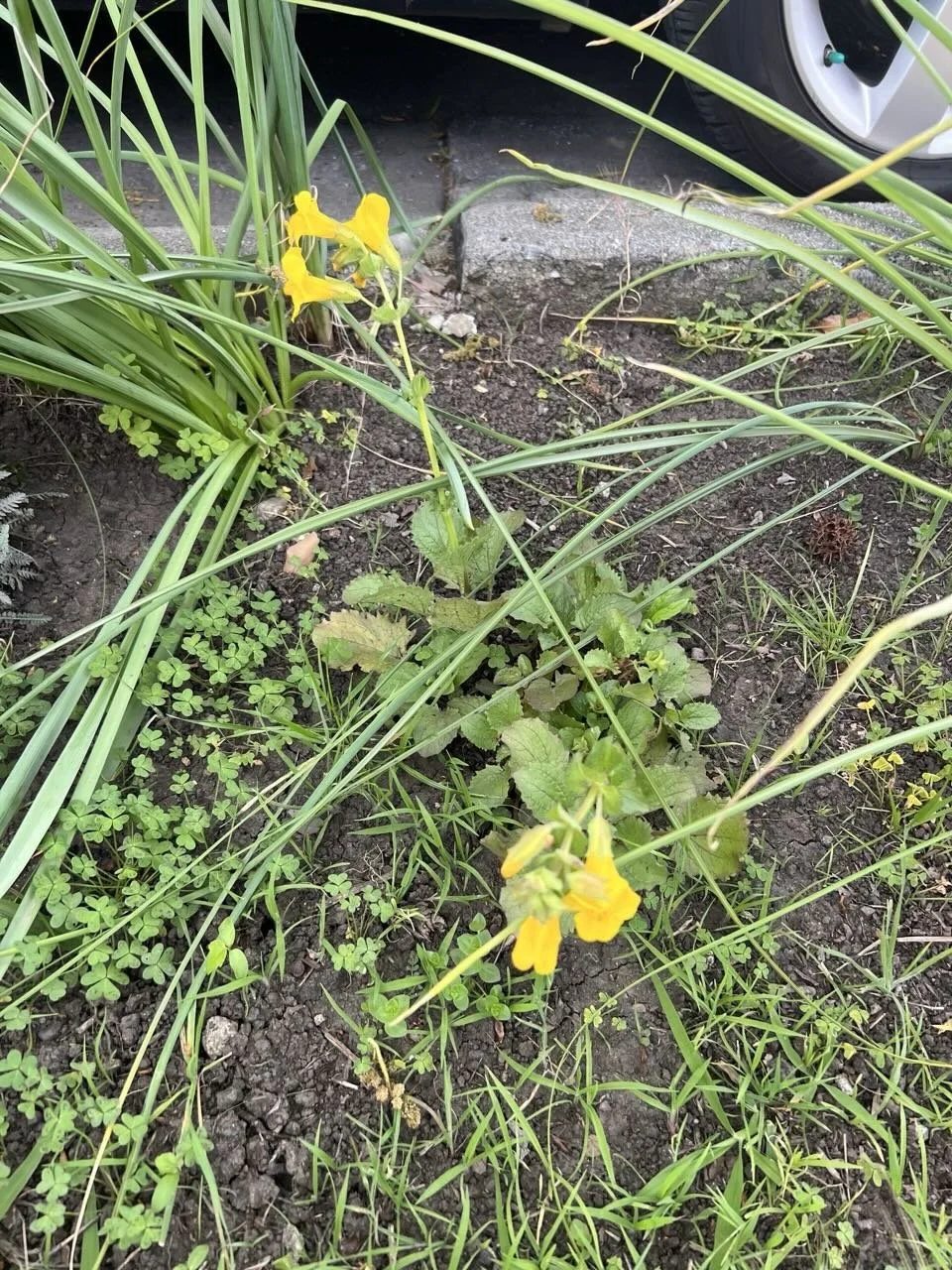
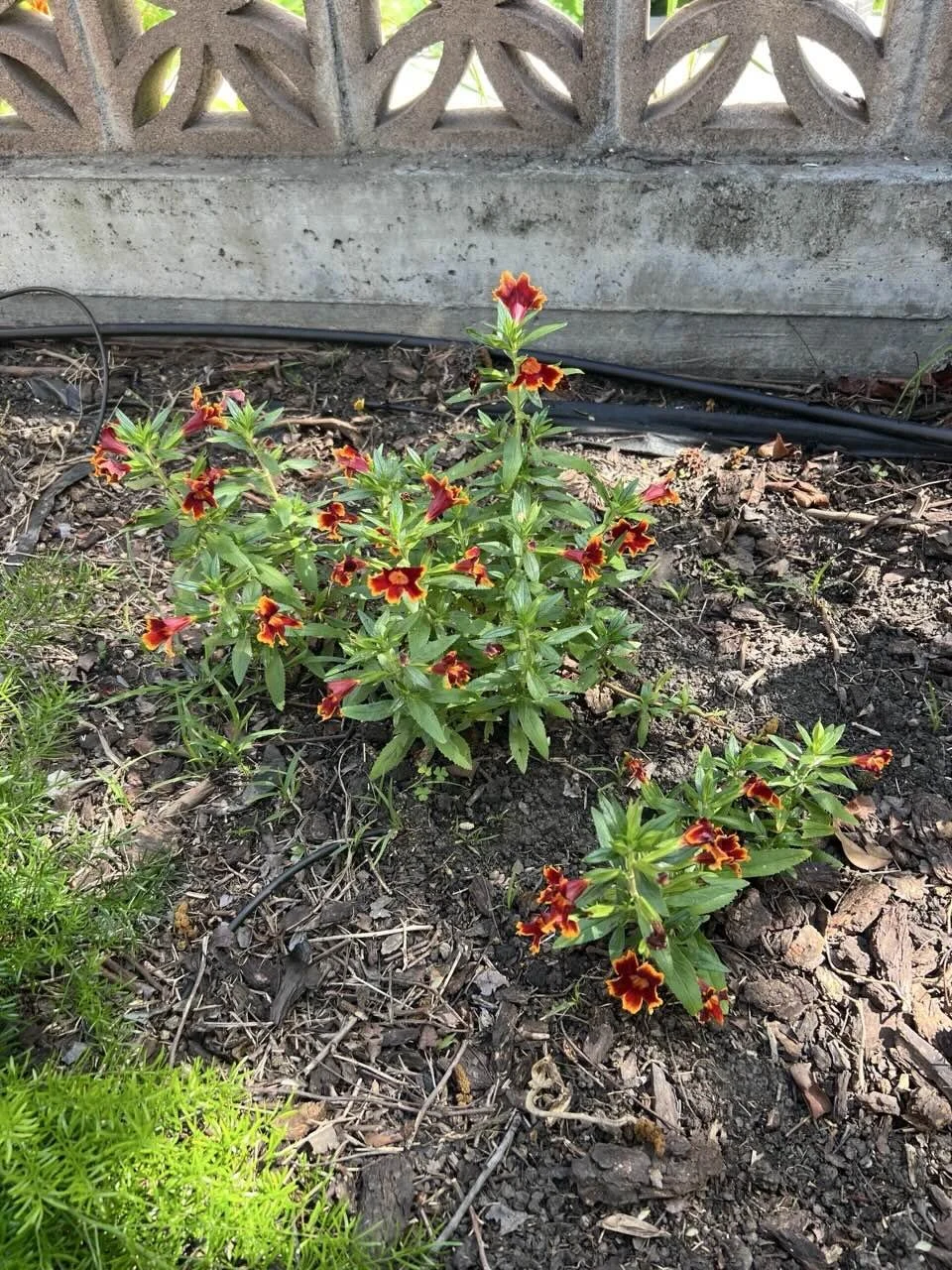
March 22, 2026 My Fiesta Marigold monkeyflower has a bud coming in! Looking back at this photo, I did not realize a jumping spider was on one of the leaves. I planted a new addition as a part of the monkeyflower collection.
Jelly Bean Dark Pink monkeyflower planted where the baby blue eyes and penstemon were taken out. Sadly, they did not grow out of their bad condition. Hence, I bought this new pink monkeyflower varietal that takes full sun (I previously thought that spot received partial shade). In addition to light, I thought about the space that it will need to grow, 2-3 ft width, and this spot is perfect for it to expand.
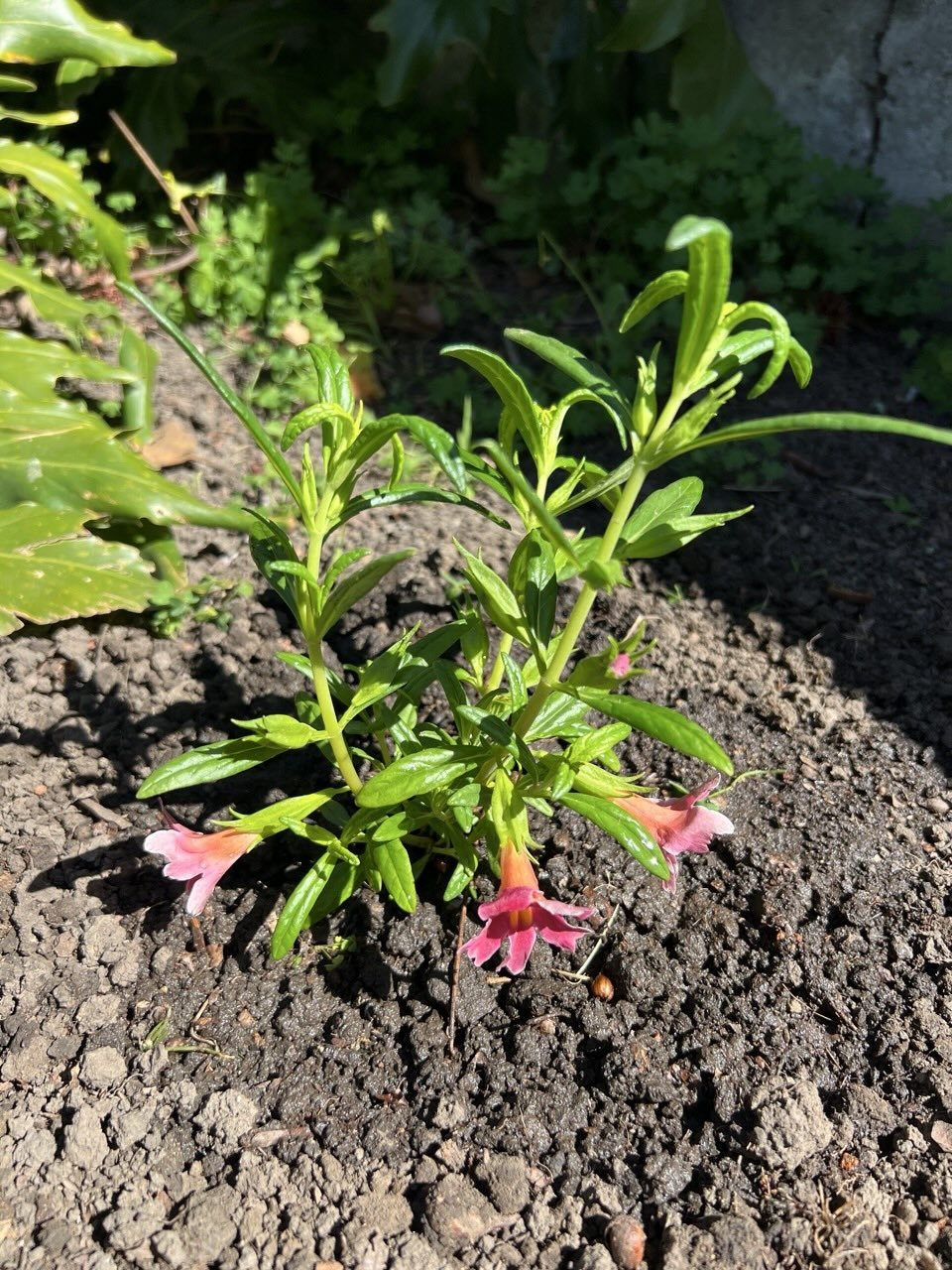
I also have narrowleaf milkweed that I have yet to plant, due to still determining where to put it. I realized that if I want to attract more monarch butterfly caterpillars, I might need more than one.
March 23, 2026 The Fiesta Marigold monkeyflower bloomed! Yesterday, I planted some yerba buena that I propagated by the driveway since the roots grew three to four inches. It was fairly easy to propagate.
March 28, 2026 I did notice my Jelly Bean Dark Pink monkeyflower was looking a bit sad due to the shock of being planted. I decided to add more water to it and give it more attention to see if it improves. I checked in on my yerba buena, but unfortunately, I did see that it was eaten to the point of the plant veins showing. I see that I have an issue with slugs. I temporarily placed the plant on a plate surrounded by salt and a bit of coffee grounds on the outside.
April 8, 2026 I noticed a native bee in my Fiesta Marigold monkeyflower! It must mean it is working. Native plants attract native bees. Planted the last few plants I recently bought, one narrowleaf milkweed, one black petunia, and one foothill penstemon. I decided to give it another try to see if a bigger size will establish more easily.
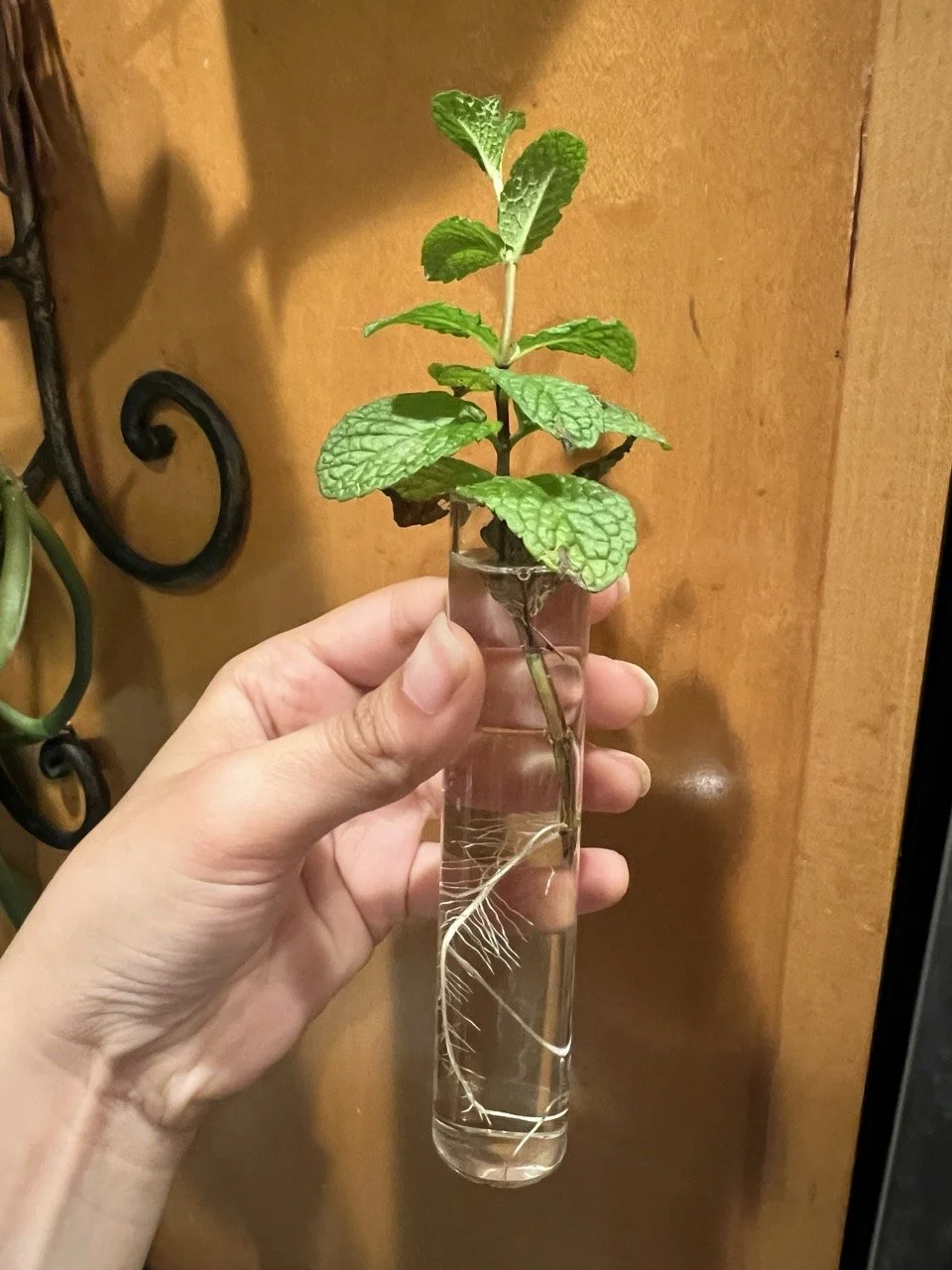
April 15, 2026 My yerba buena is now just a stem, so I decided to make another makeshift cage with the plastic cup method as another barrier from the slugs and continued to add in the salt and a bit of coffee grounds around it.
April 22, 2026 Added mulch to each planting area, except the roadside, because of tall daffodils and grasses. I weeded out some vetch that was growing from the other side of the wall into the garden.
April 27, 2026 Knowing that marigolds are a good natural pest deterrent, I planted one next to my Yerba Buena.
May 11, 2026 One of the last plants I planted was a hummingbird sage by the driveway. I did notice that for the next couple of days, it had some leaves brown and had holes. I started to water it more regularly in hopes that it would improve.
Final Thoughts
I have thoroughly enjoyed all parts of this project, from selecting the plants at local nurseries to discovering new native plants to seeing the transformation of my garden. I loved the way the monkeyflower plants have bloomed and adapted quickly to their areas. I felt the joy of witnessing a native bee in my Fiesta Marigold Monkeyflower. I learned from my mistakes to water in preparation for a hot, dry weather climate. I have had only three casualties out of my 15 new plants (excluding the seed packets), a good survival rate. On the other hand, I did not have as much success with the seeds; only two poppies came from a whole packet of California Poppy seeds. I don’t yet understand the exact explanation behind it, but it may be due to cold weather or weeds not allowing them to germinate.
Takeaways
Although the “drought-tolerant” label may suggest these plants do not need much water, small plants under a year do benefit from water once a week, sometimes twice if the weather is drastically hot. Once the plant is over a year old, it becomes more established as its roots grow and will not need as much water for survival.
In terms of weed removal, my preferred method of removing weeds is pulling by hand. While weed sprays can be effective, they can cause environmental harm to the soil, waterways, and insects (some sprays are banned in certain states). Although hand-weeding takes time and dedication, I have seen its effectiveness in reducing the growth of sourgrass and burclover weeds.
One thing I wish I had kept in mind when selecting my plant species is pairing based on how they can complement each other. Some species flourish well next to one another and will grow more quickly. There is nothing wrong with choosing plants based on aesthetics, but it can be beneficial for their growth to pair species that get along. Remember that not all plants will succeed; there might be casualties that happen, which is normal. Lastly, for the wildflower seeds that I used, I realized after I planted them that I did not know what species of flowers were included; the only idea I had was based on the cover of the packet, and after further research, I could not find a list. If I had to do it over again, I would be sure to use seeds that are explicitly stated to be native.
In the future, I hope to continue to tend to my garden as the plants become more established. I would love to add more wildflowers, such as miniature lupine and baby blue eyes, to the walkway to make it a complete blooming area next to the pollinator home. I would want to get another most beautiful jewel flower because of how pretty it is. I need to research more on wildflower maintenance, whether it is different from other plants, and the best methods to grow seedlings. I hope that with the addition of more wildflowers to the walkway, it can attract more insects. I have had very few visit the pollinator home. I can’t wait to see how the coyote mint looks once it grows with its flowers in bloom. I have learned through my experience that monkeyflowers are easily adaptable; I have had a lot of success with them.
Remember to support local plant nurseries and plant native. I wish the best for your garden and happy planting!
Thinking about adding native plants to your garden? The Grassroots Ecology Native Plant Nursery grows locally and regionally native species from carefully sourced seeds and cuttings. See our latest inventory for online sales here:
By Aranza Aranda, Habitat Restoration Intern