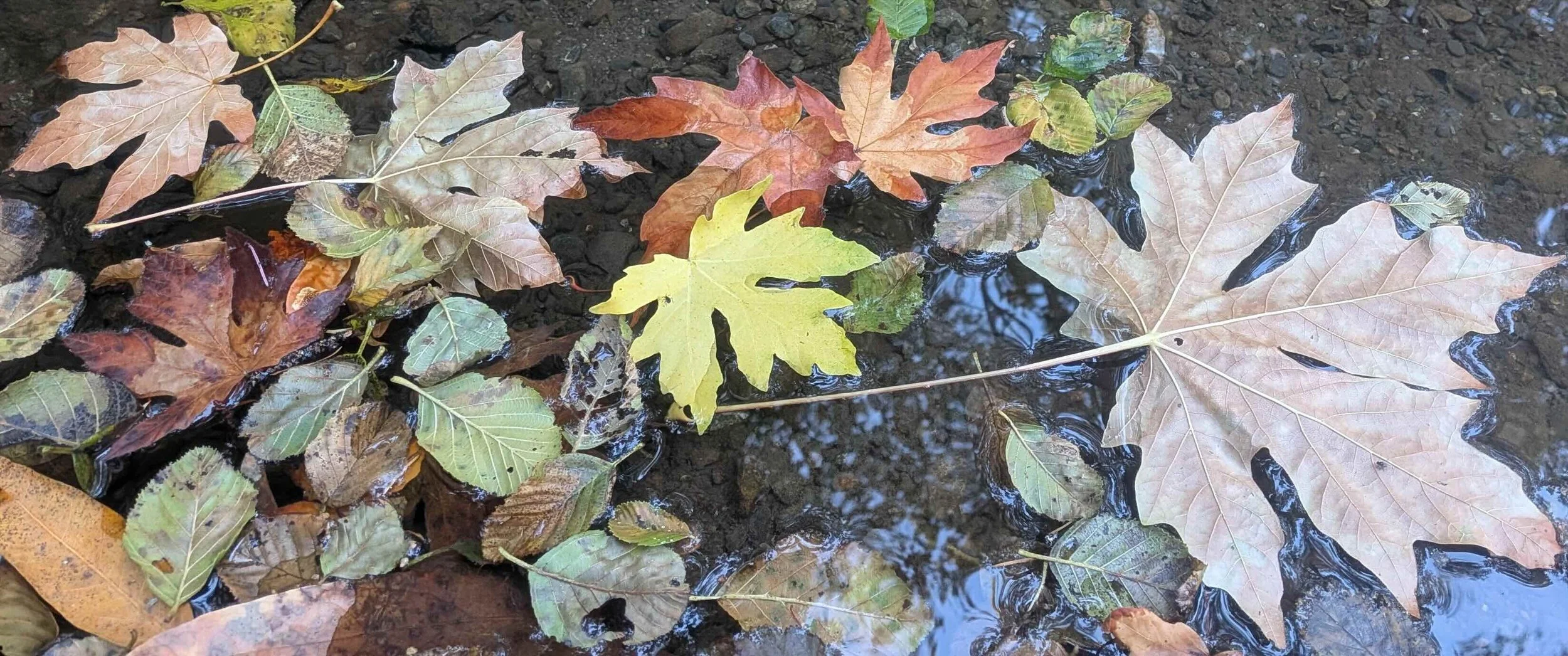
Fall foliage is a beautiful sight for those who enjoy the beginnings of colder weather. A prominent California native species that displays those varied, brilliant hues of yellow and orange is the bigleaf maple (Acer macrophyllum), making it an iconic signal of fall for the Pacific Coast. The native range extends from Alaska, through British Columbia, down to southern California. Our state has populations along the coastline and within the foothills of the Sierra Nevada. Locally, you can spot them as you explore areas along Skyline Boulevard in the Santa Cruz Mountains. They can also be found north in the Redwood National and State Parks. In these locations, they are interspersed with redwood trees, finding any pockets of light they can amongst the dominant overstory.
Growth and Seasonality
Known as the tallest maple in North America, the bigleaf maple grows fast and can reach heights between 30 and 115 feet tall to create a dense rounded canopy. In April and May, they produce clusters of yellowish-green flowers called racemes, which then turn into double-winged seeds called samaras.
The summer spurs its deep green leaves to grow large, earning its common name, “bigleaf.” They can grow to be about 12 inches wide and long, often comparable to the size of someone’s head. During the hot months, their leaves provide great shade but also a great food source for insects and deer to graze.
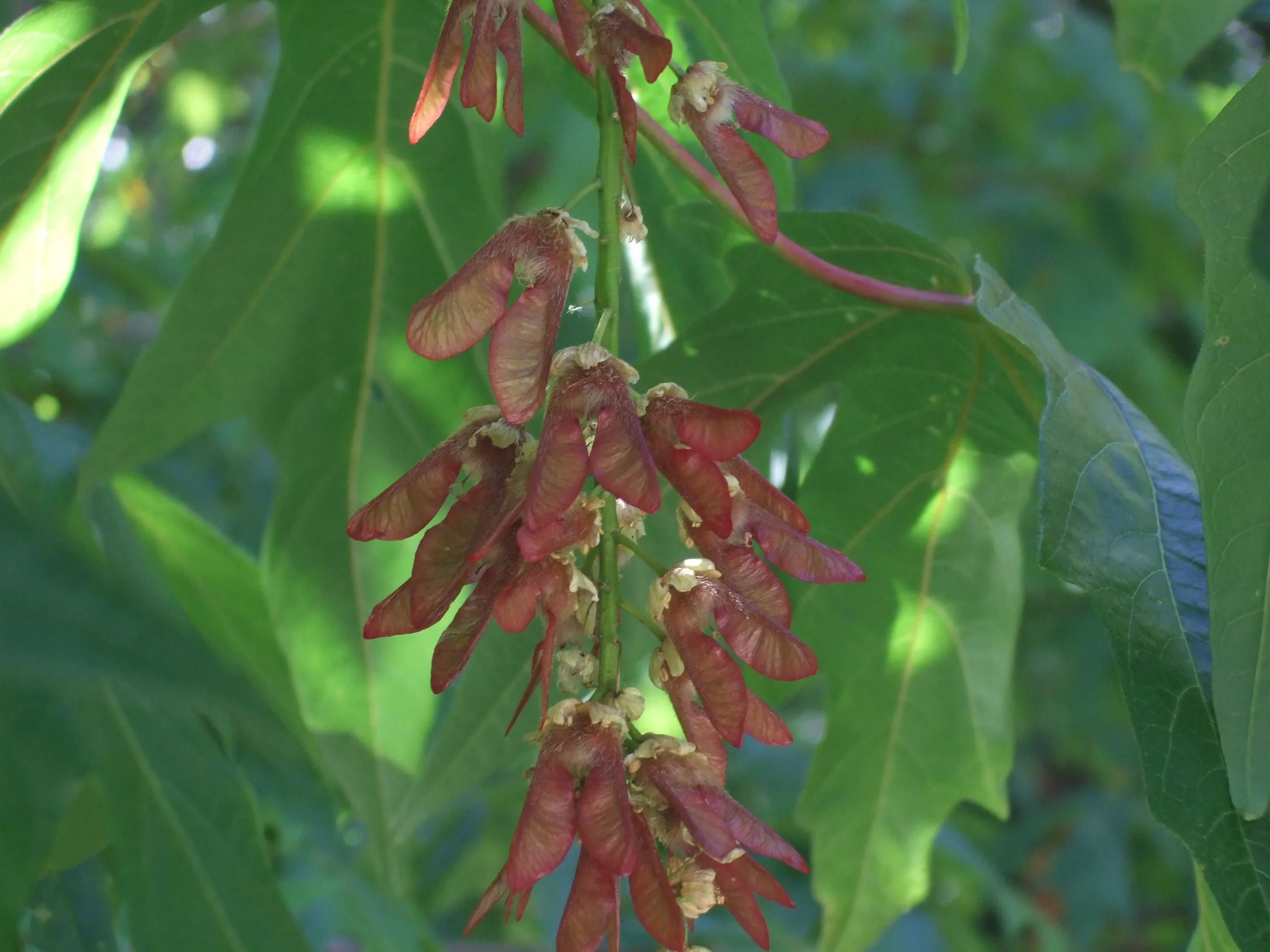
The leaves will then change their color in autumn before they fall along with their mature samaras that fly down like helicopters to the ground. Birds and small mammals feast on samaras so that not all have the chance to germinate and grow into a sapling.
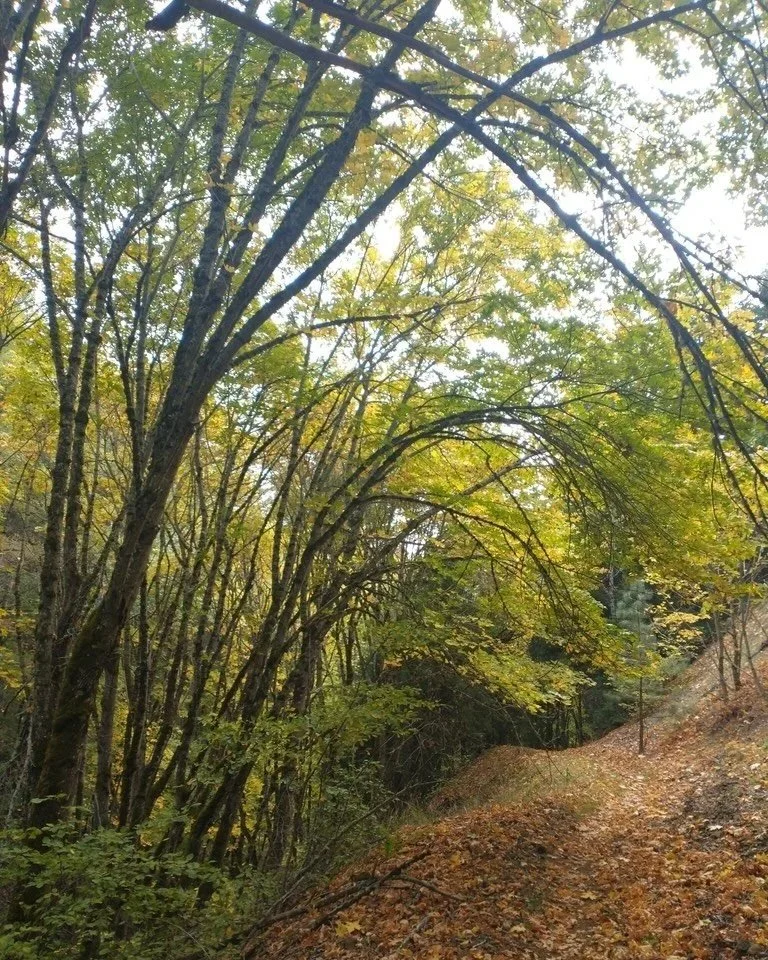
Drew Meyer, iNaturalist
Cultural Uses
Indigenous peoples along the Pacific Coast have a deep history with bigleaf maple, utilizing the species since time immemorial. The Konkow Maidu in Butte County harvest the inner bark of maples so that their fibers can become rope, baskets, and clothing. Then, leftover pieces are dried and ground into a powder that is added to thicken soups. They also collect large pliable maple leaves to cover and store food.
The Karuk along the Klamath River use the leaves to cover food in a different way: leaves are layered over bulbs of other plant species to steam them in a pot, over fire, or with hot stones so that they can soften for consumption. Furthermore, the Karuk collect the tree’s flower blossoms, dip them in a batter, then fry them up to make bigleaf maple blossom fritters.
Growing Bigleaf Maple at Home
Bigleaf maples grow along the coast because they require moist soil conditions year-round. It is especially important to irrigate individuals in the summer while reaching maturity and during heat waves. They are adaptable to varying soils but prefer good drainage.
Bigleaf maples do best in areas with partial to full shade. They grow well with other large trees, such as willows, oaks, and bay laurels. Understory companion plants of bigleaf maple must be shade tolerant and enjoy moist soil conditions, such as species that you would find in riparian habitats and mixed evergreen forests. Since bigleaf maples have a dense canopy, they may require pruning, which is best to do in the winter. And after all the care you dedicate to this species, it will thank you with its shaded canopy in the hot summer months, edible blossoms in the spring, and beautiful foliage in the fall.
Where to Find Bigleaf Maple and Other Native Plants
Look for bigleaf maples growing locally along the coastline in the Santa Cruz Mountains, or inland within the foothills of the Sierra Nevada. They can be found at local preserves including Foothills Nature Preserve, Redwood Grove, McClellan Ranch Preserve, Russian and Skyline Ridge Open Space Preserves, and Bear Creek Redwoods Open Space Preserve.
Our nursery grows native plants like the bigleaf maple using seeds and cuttings carefully sourced from local watersheds. See our latest inventory for online sales here:
By Andrea Serna, California Climate Action Corps Member