Native Plant of the Month: Hearst’s Ceanothus
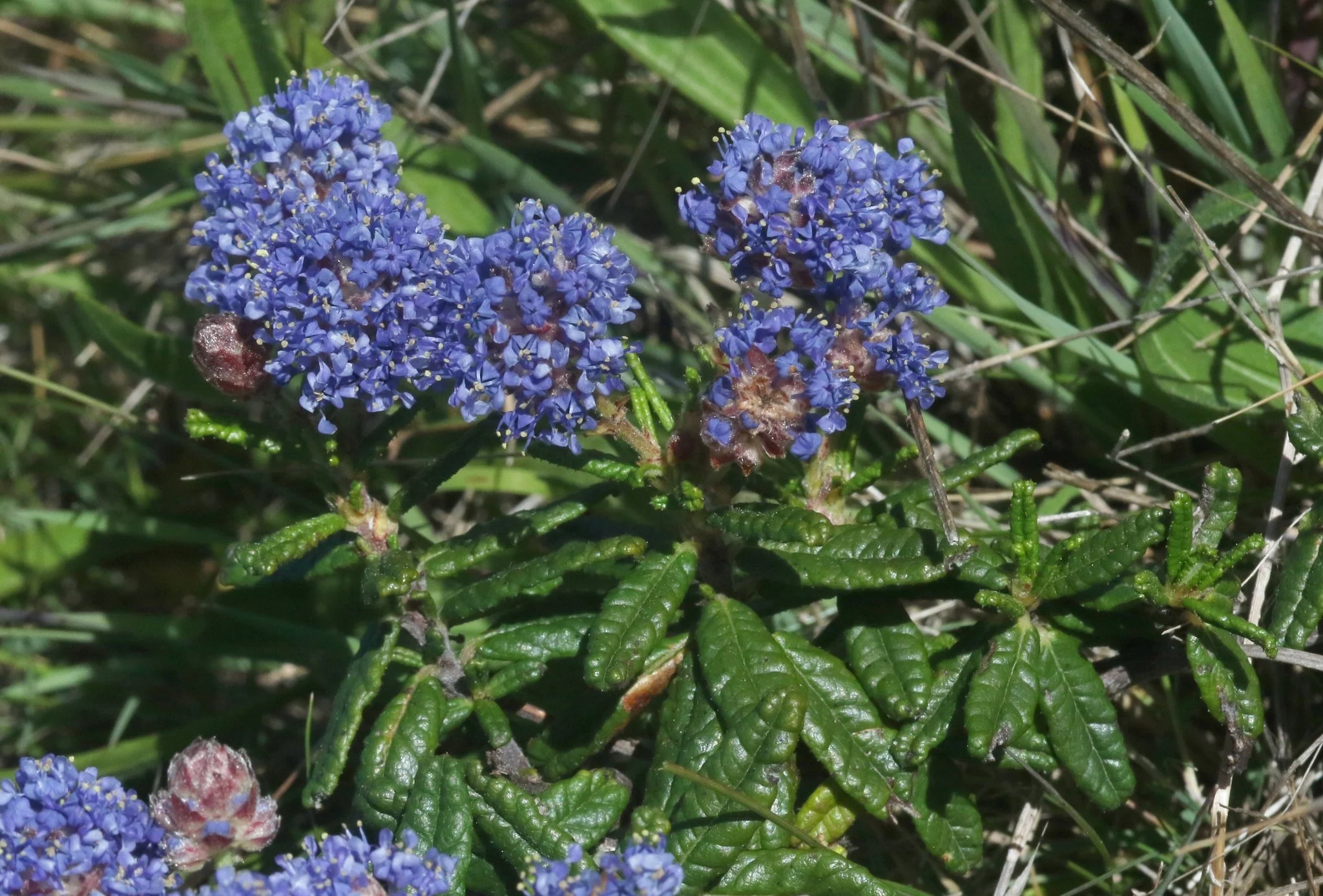
If you have ever visited Hearst’s Castle in San Luis Obispo, you may have had the chance to see one of California’s rarest plants in the wild: Hearst’s ceanothus (Ceanothus hearstiorum). Its common name and scientific epithet refer to its limited native range near the historic estate. The wide perennial shrub has evergreen foliage and striking blue flowers in the springtime, spreading color to its coastal habitat.
Rarity
There are about 50 native species of ceanothus in California. Hearst’s ceanothus is endemic to the state on the central coast of San Luis Obispo County, where it inhabits chaparral, coastal prairies, and coastal scrublands. Due to its restricted habitat, this ceanothus has been listed with a ranking of 1B.2 by the California Native Plant Society, meaning it is a moderately threatened and rare species of the state. The ceanothus faces threats of foot traffic from visitors, animal grazing, and human development, all contributing to the reduction of its wild populations.
Hearst’s ceanothus is a rare plant to find in the wild; however, it has become a popular species among horticulturalists. The beauty of its royal blue flowers, drought tolerance, and dense, constant coverage of evergreen leaves are some of the main traits that have earned its place as a beloved plant for landscaping in northern and southern California. Nurseries across the state—including our own Native Plant Nursery—keep the species in stock due to its popularity.

Growing Hearst’s Ceanothus at Home
While many ceanothus species grow as tall, upright shrubs, the Hearst’s ceanothus spreads wider than it is tall and often grows as a mat, making it excellent for groundcover. It is fit for areas with rocky soil and full sun exposure.
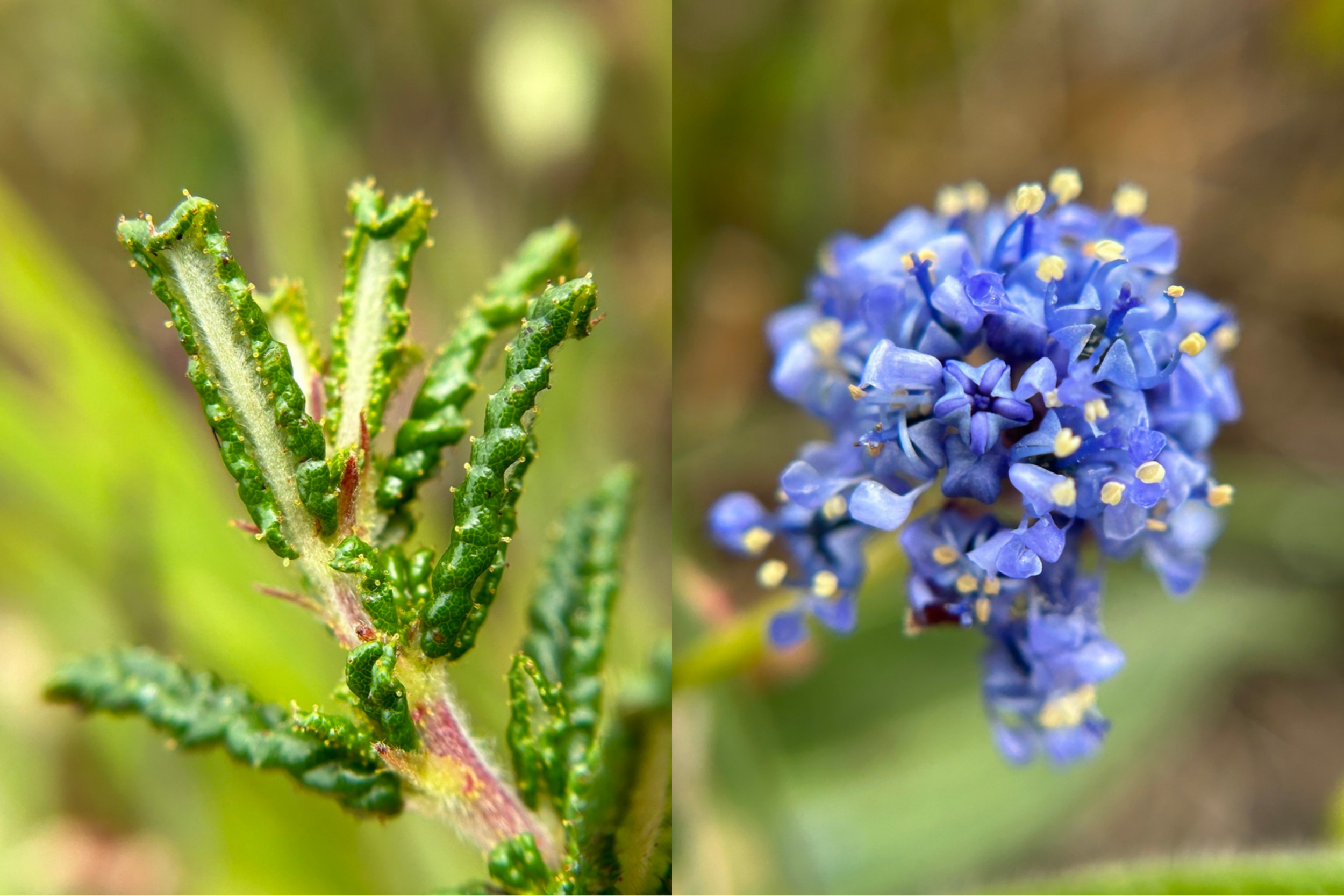
Due to its native habitat on the coast, it can reduce soil erosion with its stabilizing roots and does best with cool temperatures and fog. However, the ceanothus can be planted inland, so long as it receives afternoon shade and occasional watering in the summer. Hearst’s ceanothus does not demand much maintenance, other than potentially pruning the tips of the shrub since it spreads wide.
The flowers attract native bees and people’s awe when they bloom in March, April, and the beginning of May. This plant’s draw for pollinators will foster the pollination of other flowering species in the ecosystem, including those that it grows well with.
Coyote brush (Baccharis pilularis), coffeeberry (Frangula californica), douglas iris (Iris douglasiana), and twinberry honeysuckle (Lonicera involucrata) are great companion plants with Hearst’s ceanothus and can also be found for sale in our native plant nursery.

User cultival413, Flickr (CC BY)
Hearst’s Ceanothus adds color and covers ground in gardens with native and pollinator-friendly species.
Where to Find Hearst’s Ceanothus and Other Native Plants
While Hearst’s Ceanothus is not locally native to our region, it makes an excellent candidate for pollinator gardens due to its beauty and floral resources. View it in our demonstration gardens at Redwood Grove Nature Preserve, Bedwell Bayfront Park, and Sunnyvale Baylands Park. Our nursery grows California native plants like Hearst’s ceanothus using carefully sourced seeds and cuttings. See our latest inventory for online sales here:
By Andrea Serna, California Climate Action Corps Member