Invasive Plant of the Month: Mediterranean Lineseed
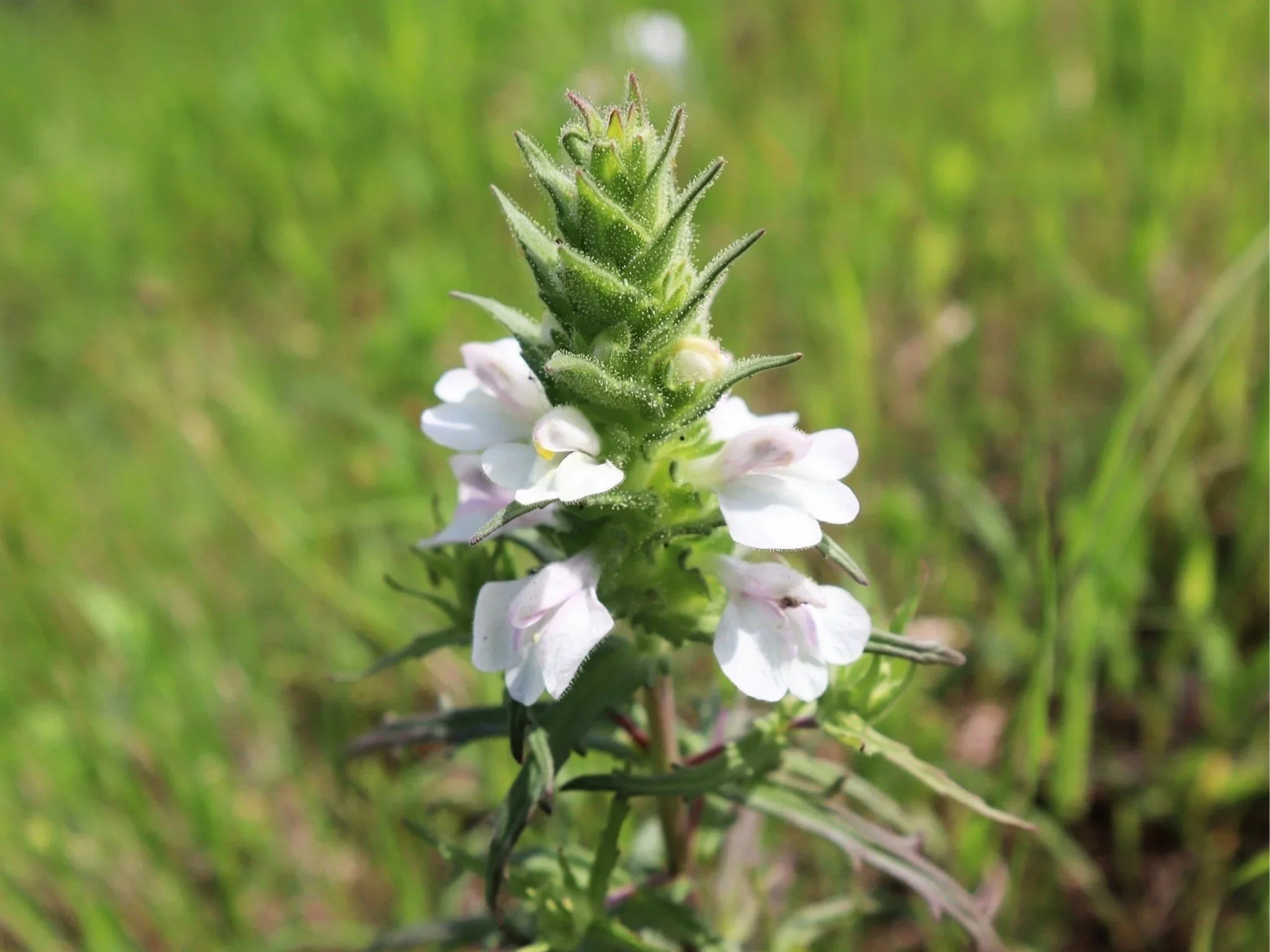
Spring landscapes are covered in beautiful blooms, but not every wildflower belongs here. Mediterranean lineseed (Bellardia trixago)is one introduced species that has been spreading across California’s grassland ecosystems. Despite its striking appearance, this colorful wildflower is actually an invasive species that can threaten California's serpentine grassland ecosystems.
Mediterranean lineseed is a robust annual herb that thrives in open, sunny, and disturbed areas native to the Mediterranean Basin. In the coastal grassland ecosystems of South America and across the United States it is an introduced species; particularly in California, it can be found in the Bay Area and Sacramento regions. Mediterranean lineseed has been documented through iNaturalist in preserves along the peninsula, including Pearson-Arastradero Preserve, Foothills Nature Preserve, Wunderlich County Park, and Russian Ridge Open Space Preserve, as well as numerous other preserves and open spaces throughout the Bay Area.
The etymology of Mediterranean lineseed’s scientific name can be interpreted in a couple different ways. The Genus name Bellardia is simple: a direct homage to the Italian botanist Carlo Antonio Lodovico Bellardi. The species name trixago, however, could have two different meanings. One possible etymology derives from the Ancient Greek word “thrix” meaning “hair,” alluding to the glandular hairs along its stem and inflorescence. Another possible etymology derives from another Ancient Greek word “trixos” meaning “triple,” referring to its “three lipped” flowers.
Mediterranean lineseed is a part of the Orobranchaceae (broomrape) plant family, which consists mostly of parasitic plants usually with yellow to brown coloration. At a quick look it may appear that plants in the broomrape family are just the dried out remains of any other green plant, but their withered look is because most broomrapes don't use chlorophyll to produce nutrients. Broomrapes obtain nutrients by parasitising through the roots of a host plant. But Mediterranean lineseed is a rich green, which means it contains chlorophyll. Why? Mediterranean lineseed is a hemiparasitic plant; it is capable of photosynthesis, but also absorbs water and other nutrients from a host plant. It latches onto neighboring plants, primarily grasses and forbs, using specialized root structures called haustoria. Mediterranean lineseed can produce a percentage of its own nutrients, but also taps into the roots of other plants to extract carbohydrates to form its striking pink flowers.
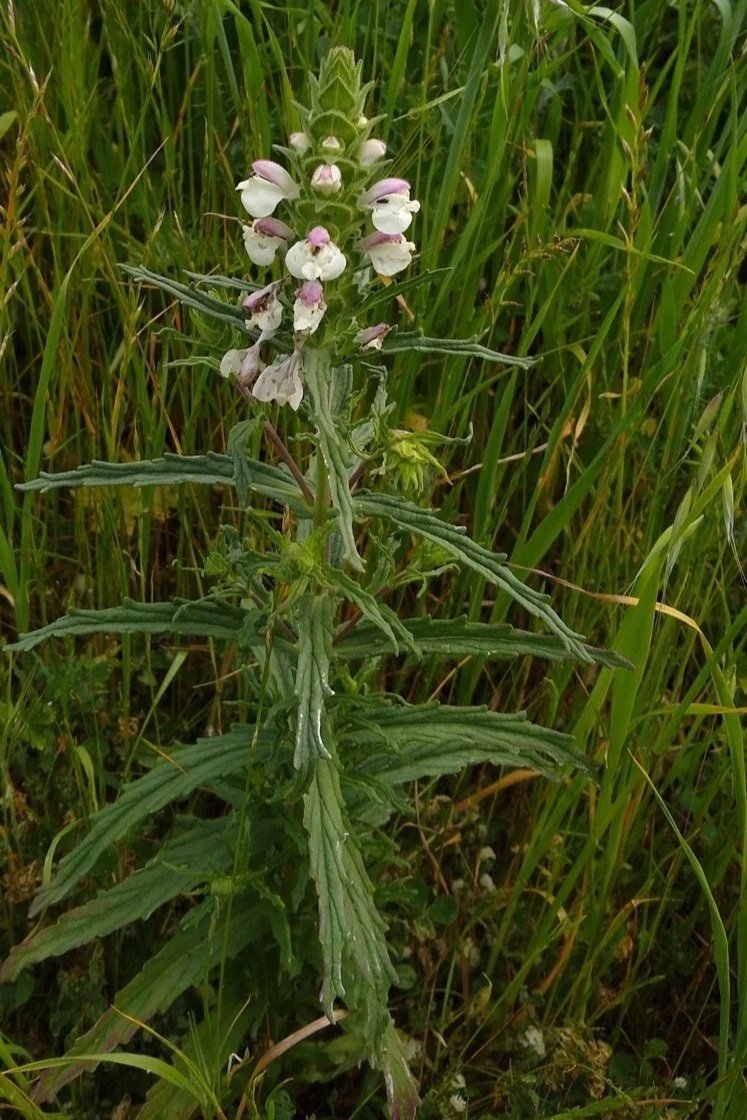
While hemiparasitic and out of its native range, Mediterranean lineseed is just as striking as any other wildflower. It often reaches over half a meter tall when fully mature. Its foliage is bright green and covered in sticky, glandular hairs. The saw-like leaves extend halfway up the plant with the upper half holding its hooded flowered inflorescence. Each flower features a whitish lower lip and a rose colored or purple hood-like upper lip. Its flowers look similar to the shape of a moth or butterfly.
Mediterranean lineseed contains potent bioactive compounds, which have been studied and shown to produce significant antioxidant, antimicrobial, and anticancer properties. In its native range, Mediterranean lineseed is used as an essential oil or prepared using ethanol from aerial parts in traditional medicine to aid different ailments. It has been used in Peru to fight backache pain, menstrual pains, and used as an antifebrile to reduce body temperature to fight fevers. The plant is also known to be used in Uganda to combat the effects of HIV/AIDS. It has also been studied on the potential use of its extracts to act as an insecticide.
Mediterranean lineseed is native to the Mediterranean basin from Portugal to Turkey. Its direct introduction to the US and specifically California is unknown, but it is speculated to have been introduced—like many other European species—through contaminated seeds or as an ornamental. It was first reported as an introduced species in the United States in the early 1970s, specifically with a documentation in Texas in 1972 and California at least in the 1980s. Mediterranean lineseed has spread by taking advantage of the availability of host plants and lowered competition from native plants (reduced in abundance by poor management and invasion of other introduced species) in California’s grasslands.
The plant spreads mainly through seed dispersal. Although Mediterranean lineseed’s invasiveness is considered as only low to moderate according to CALIPC, it has a high seed output with up to 10,000 tiny seeds (often only 0.5-1mm) per plant that can easily spread through wind. The plant can form dense stands that crowd out native plants within grassland ecosystems. Because Mediterranean lineseed is an annual plant, management efforts are focused on removing the plant before it is able to produce a flower and seed. Hand pulling is effective for smaller patches (making sure to get the whole taproot!), while larger stands may require mowing before seed production, along with monitoring populations over multiple years.
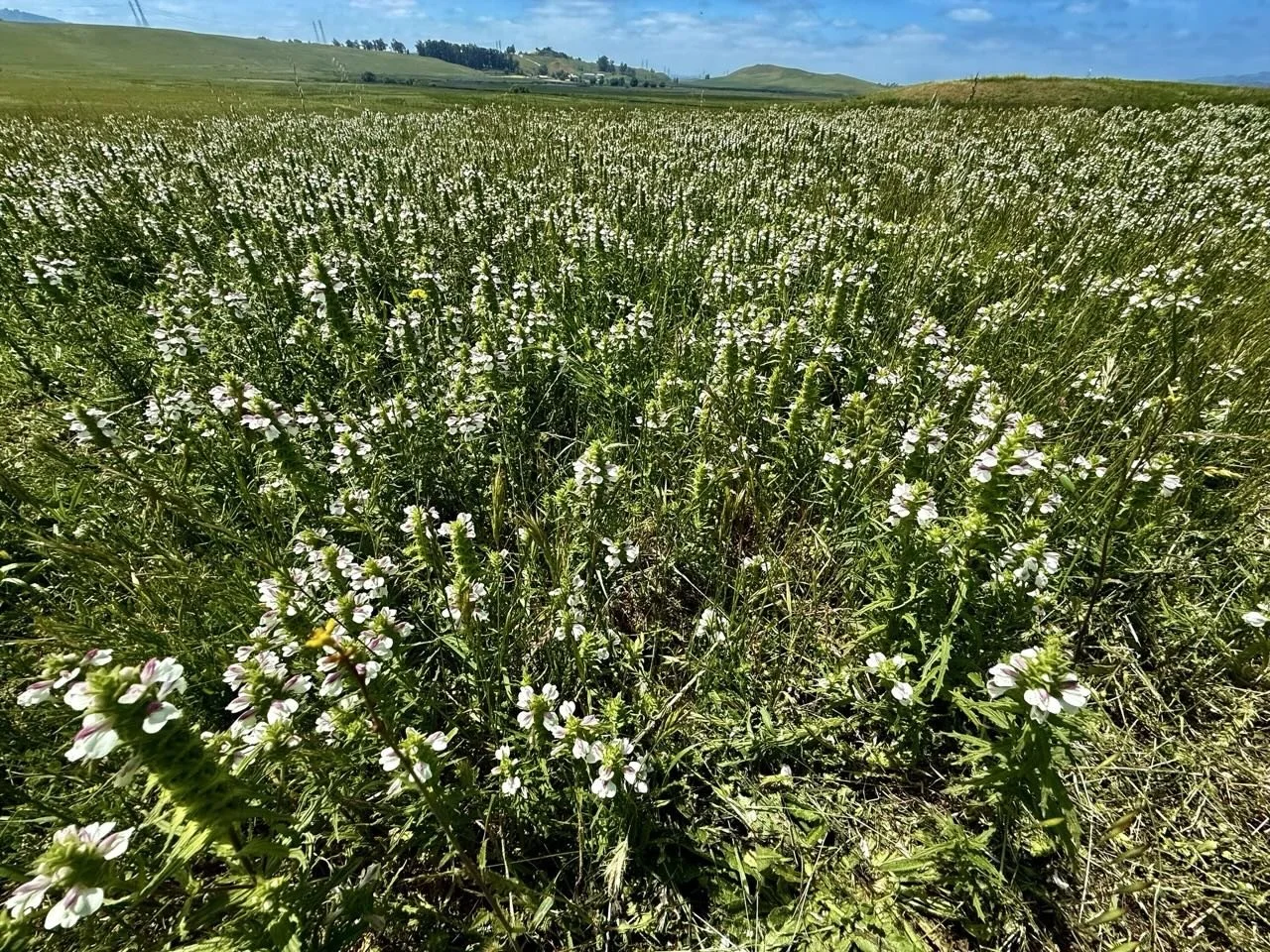
Beneath its vibrant pink blooms, Mediterranean lineseed poses a quiet challenge to California’s native grasslands. Its unique hemiparasitic biology make it an intriguing plant from a botanical perspective, yet its ability to spread into sensitive grassland habitats can come at the expense of native biodiversity. Whether it’s admired for its pretty pink flowers or for its medicinal history, Mediterranean lineseedshows us the relationship that introduced species have with the vulnerable ecosystems they exist in. Being able to recognize invasive plants like Mediterranean lineseed allows us to better understand the effects of invasive species and protect California’s unique native landscapes while still appreciating the stories these plants have to tell.
By Calla Timmerman, California Climate Action Corps Member