Inside our Bird Boxes at Byrne
Since 2016, Grassroots Ecology has kept a watchful eye—many pairs of eyes, actually—on the birds of Byrne Preserve. A couple years after beginning our partnership with the Town of Los Altos Hills to steward its open spaces, our staff member Valerie Lee installed a dozen bird boxes, several of which were donated by a generous neighbor, as part of her California Naturalist capstone project and developed a monitoring protocol to go with them. Ten years later, the project is still going strong thanks to the dedication of staff, AmeriCorps members, interns, and volunteers who maintain and monitor the boxes season after season. In the interview below, we catch up with the current team carrying the torch (and the clipboard) for a peek inside the box at what our feathered residents are up to.
Why do we need bird boxes at Byrne Preserve?
About 36 species of California native birds rely on natural cavities for habitat, to safely raise their young, and for protection from predators. Natural cavities can be found in old, decaying, and dying trees. They can be created through natural means such as fires, the decomposition of dead wood, or by the boring of other critters such as woodpeckers and beetles. However, due to the constant pressures of development, the needs of public safety, as well as many homeowners’ aesthetic preferences, dead trees that would be considered ideal nesting habitat for native birds have been removed from our backyards and open spaces. With the disappearance of nesting habitat, native birds have started disappearing too. We installed bird boxes to provide habitat and return cavity nesters to their native habitat and place in the food web.
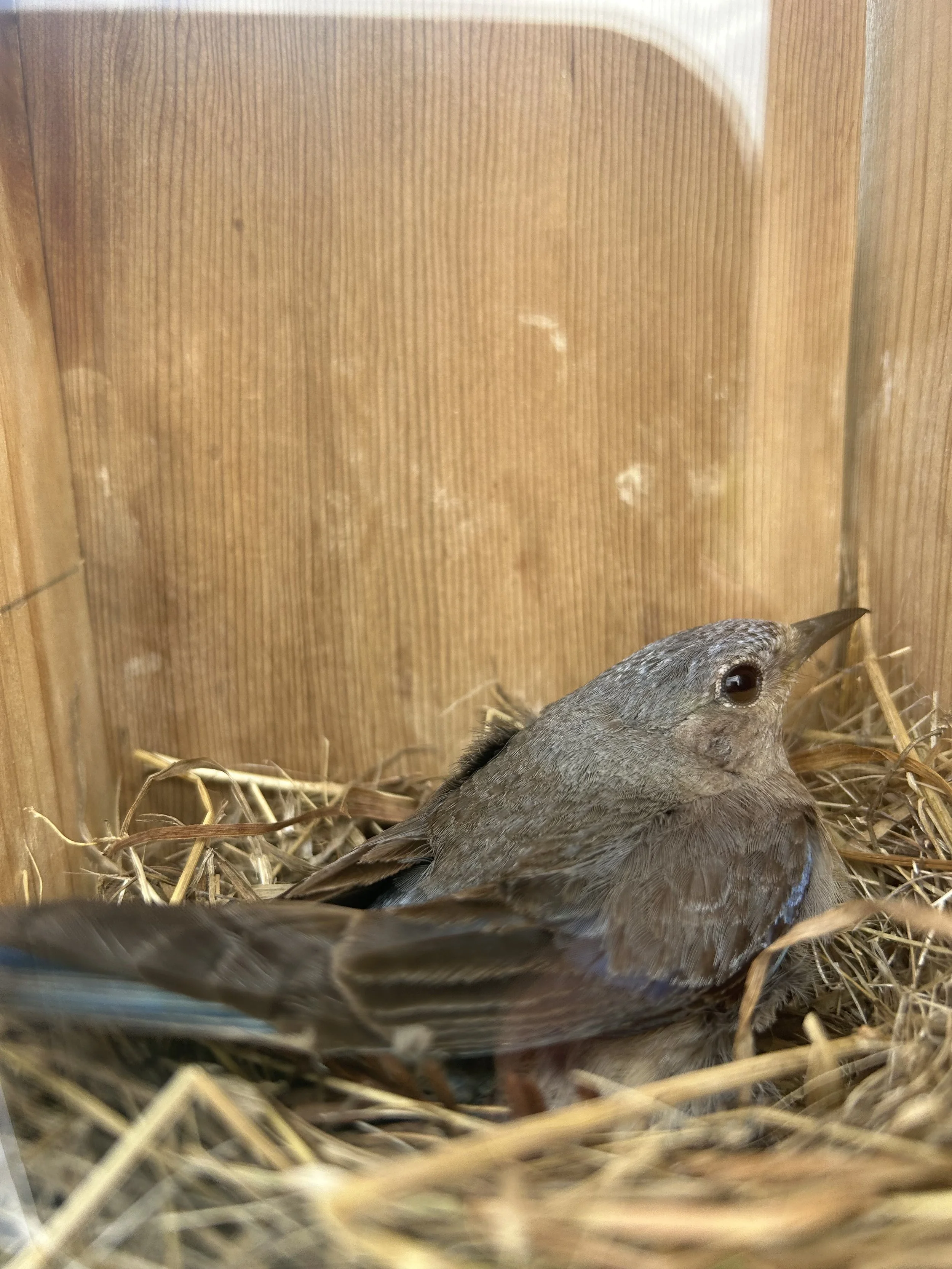
In Spring 2026 we had 10 nesting attempts, with 40 eggs laid, 32 young, and estimated 14 fledged. Species included Western Bluebirds and Violet-green Swallows.
What species are you trying to attract and protect?
The boxes are designed for native Western Bluebirds, and those are the majority of birds we find in the boxes. We also get a few Violet-green Swallow families each season! Bird boxes should be customized for the birds that will use them, since certain features (for example, an entry hole that’s too large) can lead to predation by larger birds.
What’s interesting to you about the bird boxes?
Over the years, we’ve had some incredibly hot, dry seasons followed by very wet years with cold weather stretching into April and May. It’s been really interesting to see how nesting behavior varies with the climate. For example, in 2022 we already had 5 nests by the end of March; in 2023, we didn’t see our first nest until mid-April. Monitoring bird nests will help us better understand how birds are responding to increasingly variable weather, rainfall, and shifting seasons due to climate change.
What does bird monitoring involve?
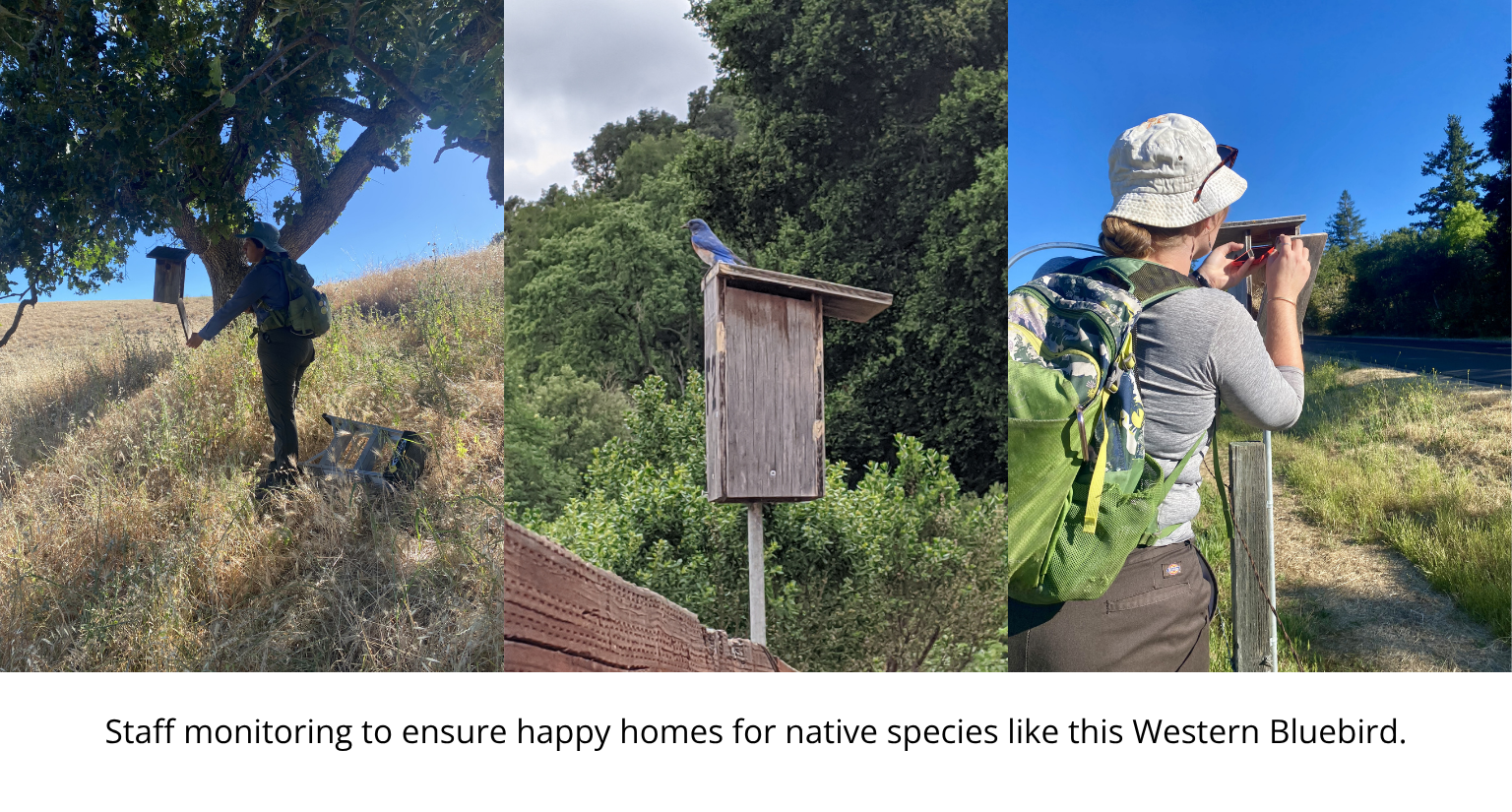
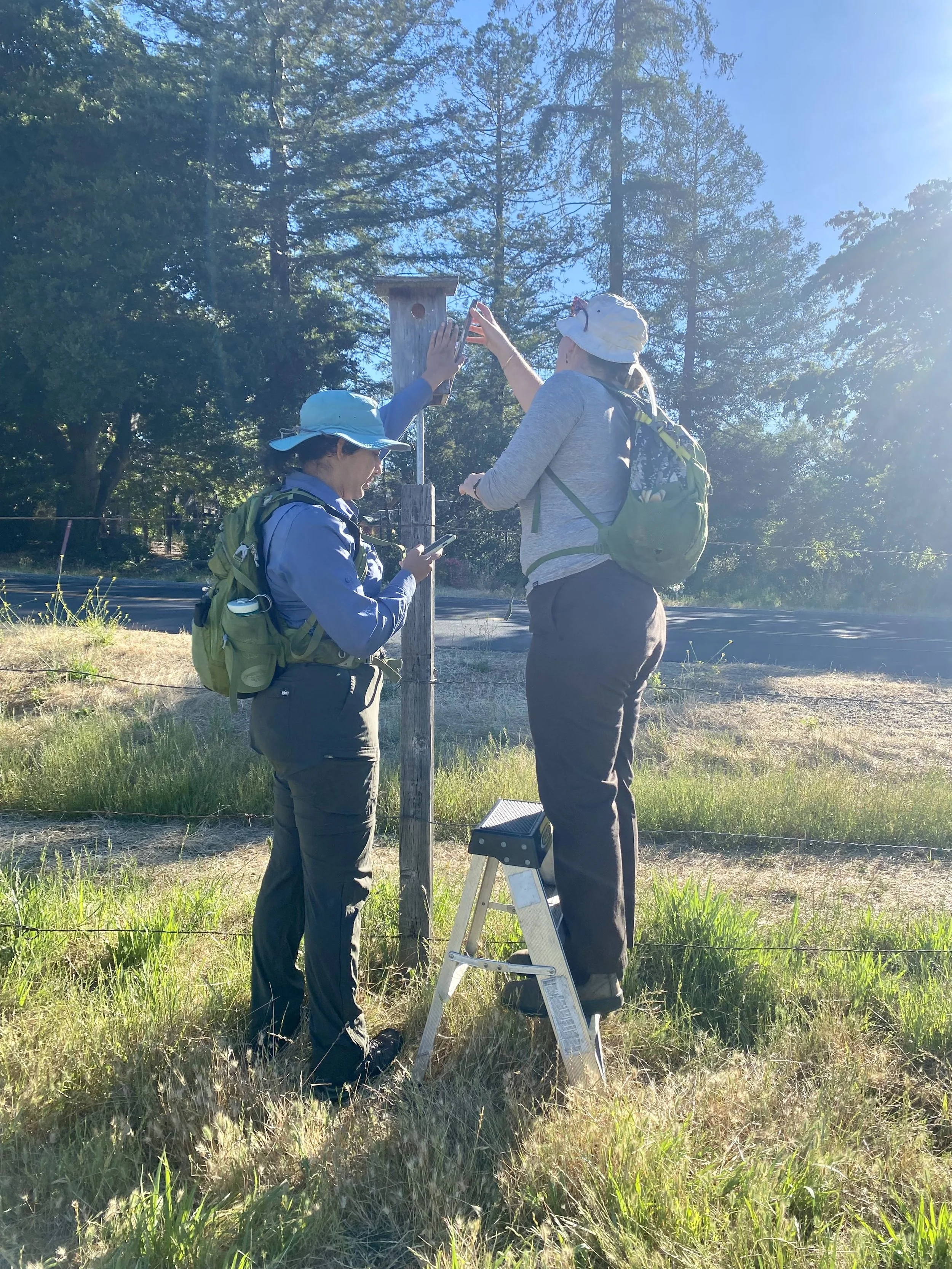
Lots of hiking around Byrne Preserve! The boxes are spread out to give bird families enough space to forage for food, so it takes a while to walk around to each box. From March through July, we visit all the boxes every 7-10 days to document if there is a nest. If we find a nest, we note whether there are eggs, hatchlings, or fledglings present and how many. We also record other observations, like birds seen flying around the boxes or signs of rodents using the boxes. If all the baby birds have fledged from a nest, we remove the nest and clean out the box so another family can use it. In 2023, we started using the Cornell NestWatch app to monitor the boxes. It’s a great tool to keep us organized, and the data is automatically included in national studies of bird nesting and bird box use.
Why is ongoing monitoring important? Can’t we just leave them alone?
Monitoring ensures that our nest boxes are having a positive impact on the ecosystem and providing habitat for native birds. We are careful to track which species use our boxes so that we do not inadvertently provide habitat to an invasive nester. For example, House Sparrows and Western Bluebirds are about the same size and search for similar spaces in which to make their nests. However, House Sparrows were introduced from Europe and are vicious houseguests. They’ve been known to kill native adult bluebirds and smash their eggs, stealing nesting sites to use as their own. Early detection of invasive birds helps us ensure that the boxes are used to benefit native species. Monitoring also allows us to clean out boxes between broods so they can be used multiple times during a single season.
How do the bird boxes fit into restoration efforts at Byrne Preserve?
The native plants we install in our restoration areas along the seasonal creek that flows through Byrne provide food for many species of caterpillars. Each species needs a specific host plant or group of plants—so the more diverse our native plants are, the more diverse the population of caterpillars will be. One species of caterpillar that is abundant in our planting areas is the variable checkerspot butterfly, which feeds on several native plants, including beeplant and sticky monkeyflower. Caterpillars are essential for baby birds—providing lots of protein!—and songbirds need several thousand caterpillars to raise their nestlings.
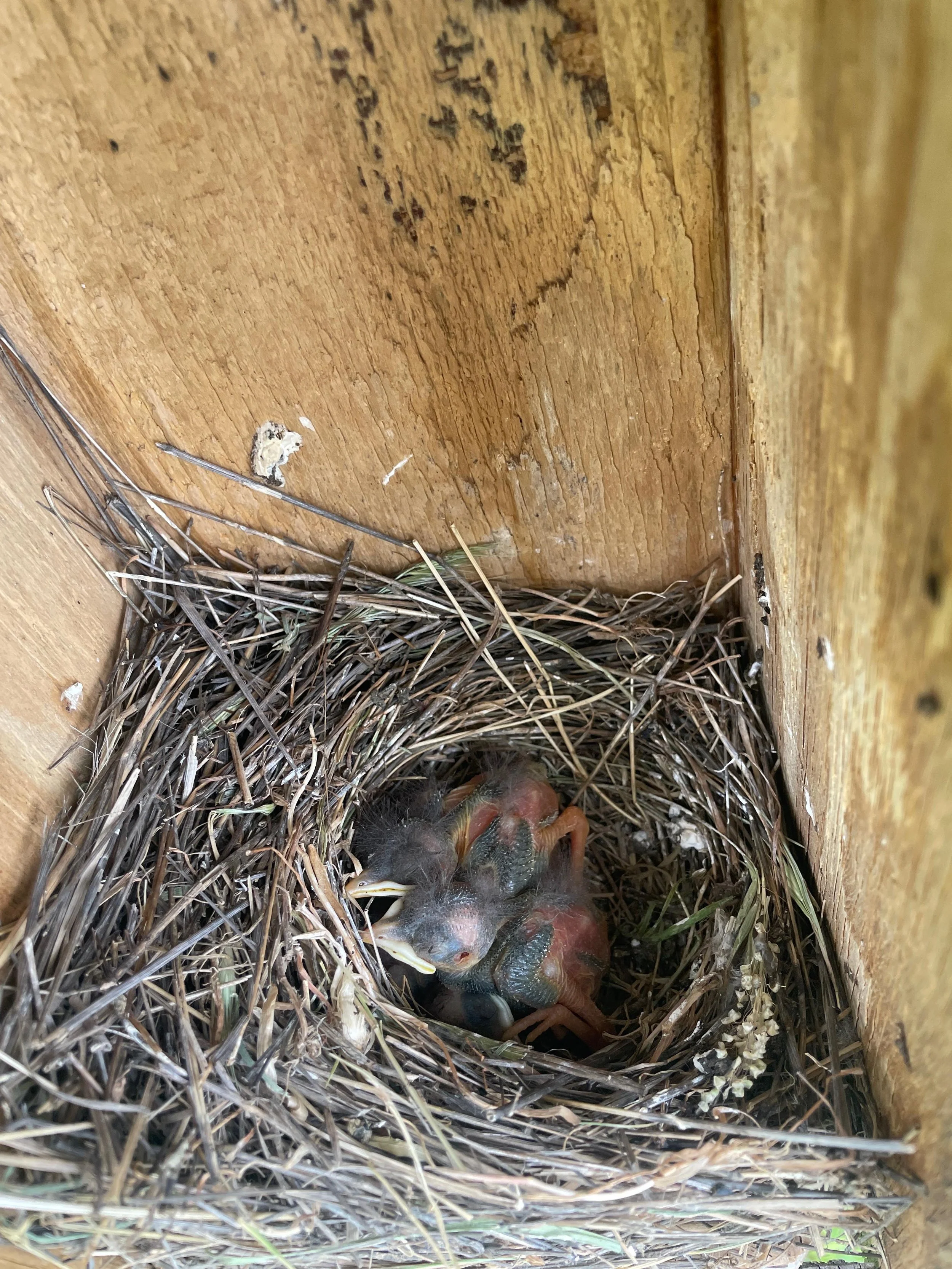
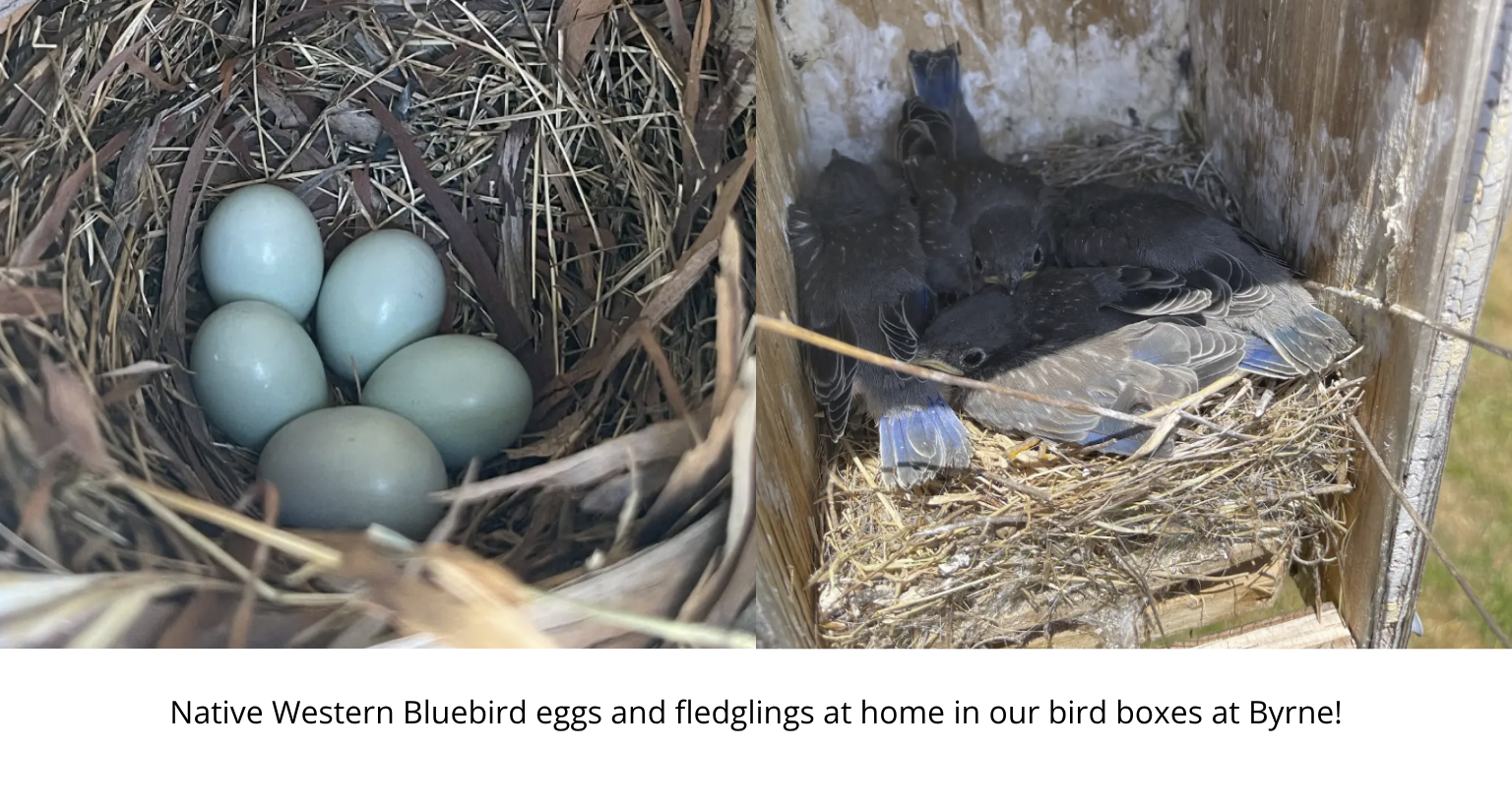
Western Bluebird hatchlings found in our nest boxes in Spring 2026.
What are your most memorable experiences of bird box monitoring?
Once we found a gopher snake eating the eggs of a bluebird nest. We had to unscrew the box from its post and place it on the ground to carefully evict the snake from the box with a long stick. Last year, Alex Watanabe, one of our Youth Stewards, installed a wire mesh guard around the entry hole of the box to prevent future snakes in the box!
It’s also incredible to watch the process of birds nesting from start to finish. Even though monitoring is hard work, it was always one of my favorite parts of my job when I was a Restoration Specialist at Byrne. I couldn’t wait to open the boxes to see if eggs had hatched or see how much the babies had grown. It’s been amazing to see our interns build a similar relationship with the bird boxes. We’ve incorporated so much collective knowledge about birds and monitoring thanks to all the people who have been involved with this project!
What lessons have you learned from this project?
The birds always surprise me! They seem to love the boxes I think they’ll hate. For example, one of our bird boxes hangs from an oak tree, so it’s less stable than the ones mounted on sturdy posts—but it’s been one of our most active bird boxes. There are so many resources online about how to design and where to place boxes, but the most helpful learning tool has just been observing birds at Byrne over the years. In a similar vein, I battled a family of mice for a whole monitoring season that relentlessly built nests in one of the bird boxes. I kept removing them, and they kept coming back. Eventually, I conceded that they needed a place to live too and we only have so much control over our natural environment.
Are any of the preserve neighbors or volunteers involved in the project?
Neighborhood resident and avid birder John Metcalfe—who donated some of the original boxes installed in 2016—regularly checks in with us on the nest boxes and has donated to keep our monitoring program going. Local high schooler Alex Watanabe also helped repair and replace several nest boxes at Byrne Preserve this past year as part of his Eagle Scout Project. This summer, two of our Naturalist Interns will also be helping to make repairs to nest boxes at multiple preserves where we monitor nests. This outside help has been critical to keeping our bird monitoring going, and more support is always welcome!
By Siena Watson, Project Lead