Grassroots Ecology Restoration Sites Now and Then: Redwood Grove
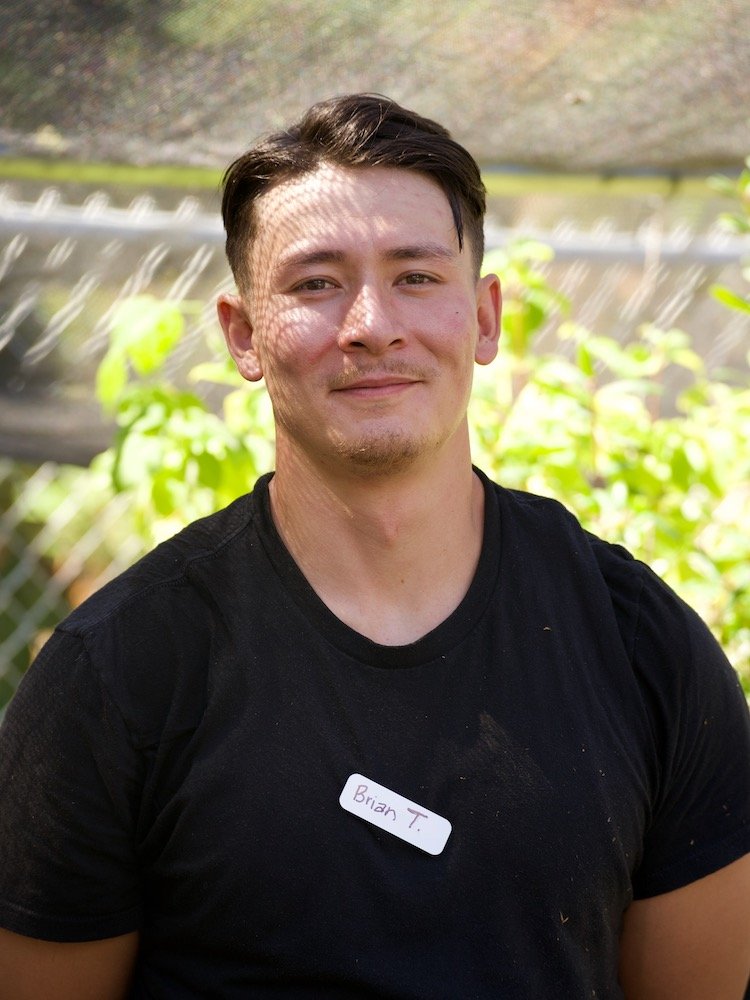
In honor of our 10th anniversary, we're highlighting some of the restoration sites that have been part of our story from the very beginning. In this Q&A style blog post, Project Lead Brian Tatsuta reflects on the transformation of Redwood Grove Nature Preserve in Los Altos, one of our longest-standing stewardship sites. Like so many staff, volunteers, and partners who have taken part in caring for Redwood Grove over the years, Brian has developed a deep connection to this special place.
How have you seen Redwood Grove change since you’ve been working there?
Season-to-season, and year-to-year the landscape is constantly changing at Redwood Grove. Within my short time working here, the change that I have been most impressed with is the growth of the “Euc” restoration area.
In early 2022 the area was barren. Three large eucalyptus trees had been removed and chipped, leaving an open canvas for staff to express their ecological creativity. When I began interning at Redwood Grove later that year, there were a few native shrubs, but the success of the area remained tenuous.
Fast forward three and a half years, and the space is crowded with native plants that support a myriad of pollinators. The transformation from bare soil to a mature and functioning garden has been amazing to see!
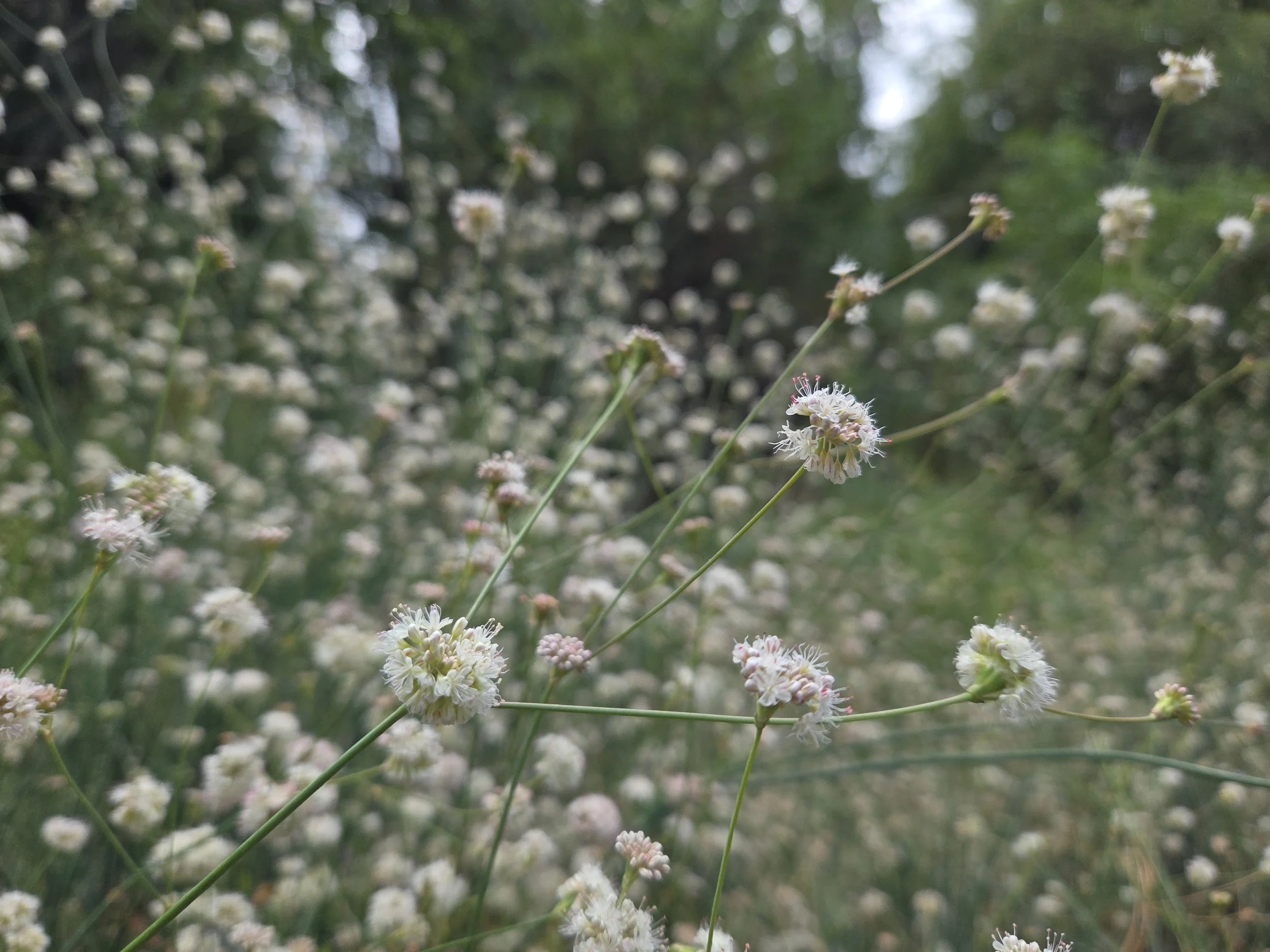
The open canvas created when invasive eucalyptus trees were removed has been transformed with native plants—and pollinators have taken notice.
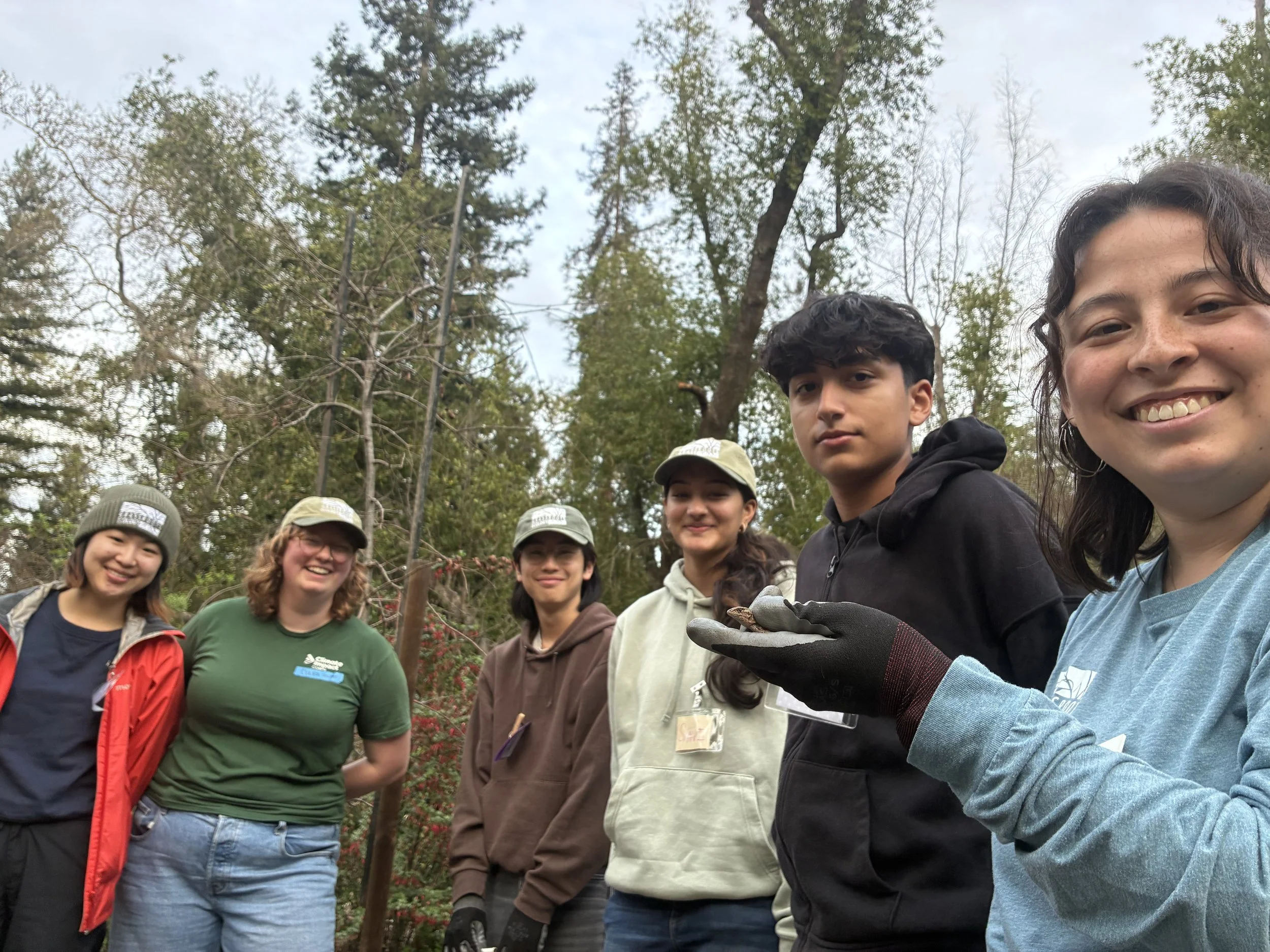
Redwood Grove Youth Stewards slow down from their busy lives to admire a Western fence lizard—one of the small beneficiaries of their stewardship work.
What are your personal favorite things about Redwood Grove?
At Redwood Grove we are lucky to have so many community members who are passionate about the space. From past volunteers to the families who come to make lasting memories, it is humbling to be embraced with such support for our work.
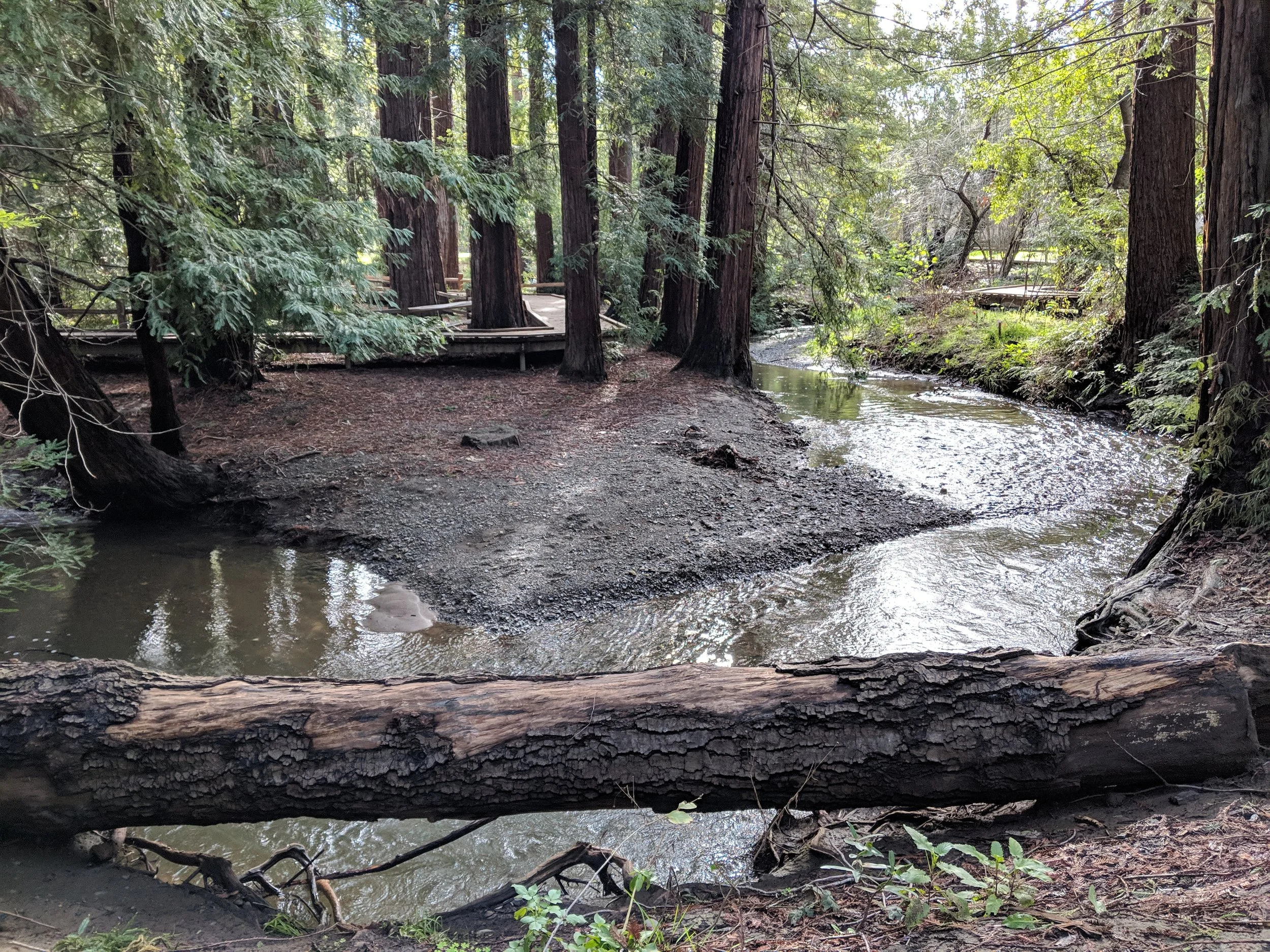
The special thing about the preserve is the opportunities it creates for young people to experience and physically interact with the natural world. From exploring Adobe Creek when it flows in the winter and spring, to the structures built from fallen redwood branches, Redwood Grove offers unique opportunities that are often missing from the fast-paced, tech-driven world of Silicon Valley. I am very grateful to help facilitate the curiosity of the young minds in our community.
Is there a moment, achievement, or memory that you are particularly proud of at this site?
In a culture that is often disconnected from the natural world, I am most proud of the moments when I have been able to empower individuals to engage with the environment around them.
Redwood Grove has had a long history of community land stewardship, and the changes that we see on site are directly tied to the work of our volunteers. It is always moving to see community members return to areas they have volunteered in, and see the change that they helped to create.
Recently, at a private event, the event’s organizer told me that he had chosen to volunteer at Redwood Grove because he had grown up attending summer camps there. He told me about childhood memories of him and his family visiting, and his warm tone conveyed the value that this place held for him. It was powerful to be a part of such a full circle moment, when someone was able to give back to the place he had gotten so much out of.
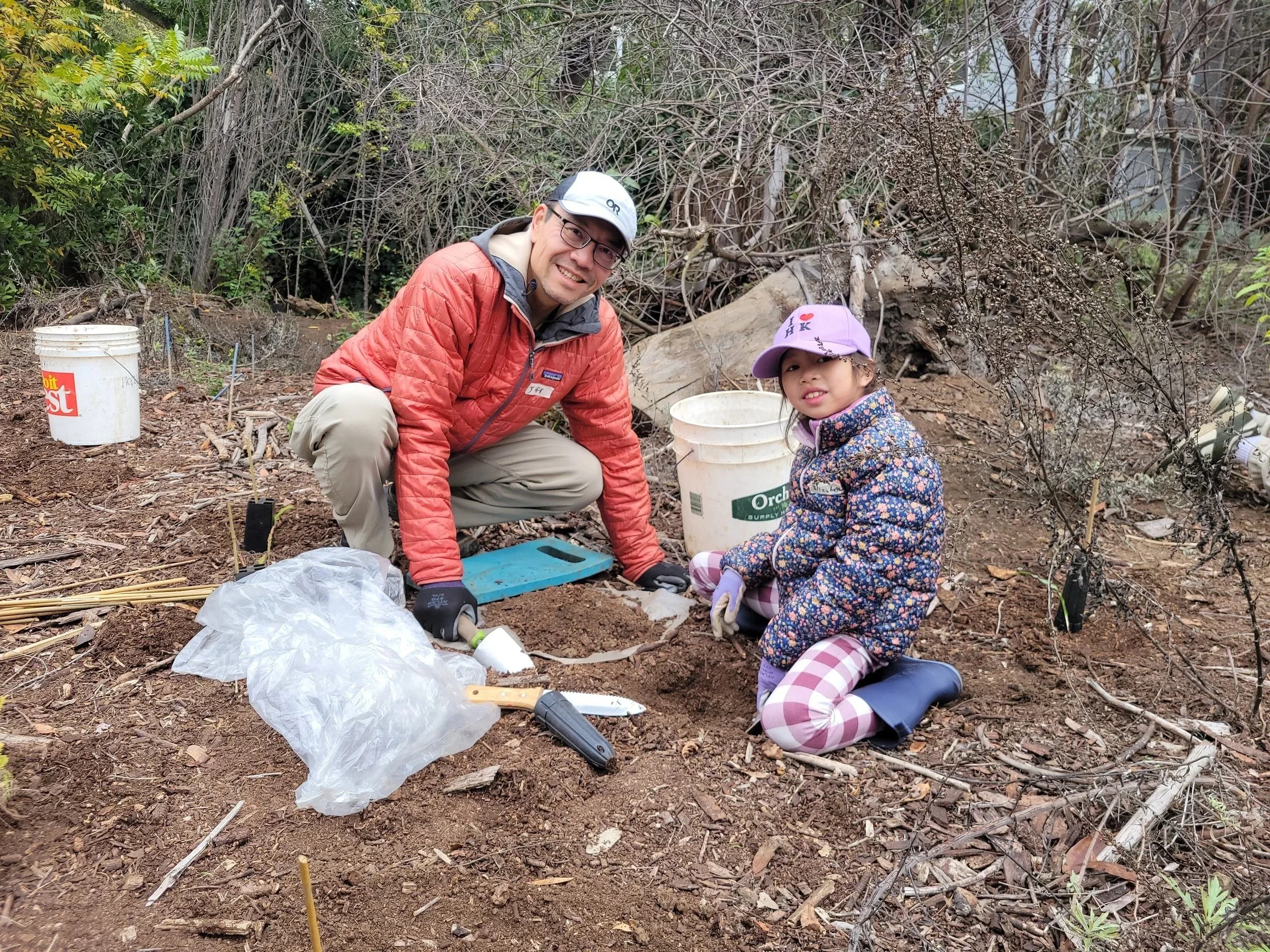
Opportunities to restore and care for Redwood Grove have connected thousands of people to nature and to one another over the years—with many returning to the site through different seasons of their lives.
What were some challenges (or challenging moments) in your work here?
The successes at Redwood Grove have also come with challenges. The comparatively warm, dry climate of Los Altos is not ideal for the fog-loving giants that are our preserve’s namesake. As the Climate Crisis furthers the unpredictability of weather, our stewardship of the space will have to adapt quickly. Currently, our weekly watering of the redwoods has aided in maintaining their health.
As new plants are added each year, it has been a challenge to balance protecting our young plants and encouraging exploration. Foot traffic and accidental trampling is often the demise of new plantings. While we want young visitors to build confidence exploring nature, our plant cages are not always enough protection from fast feet.
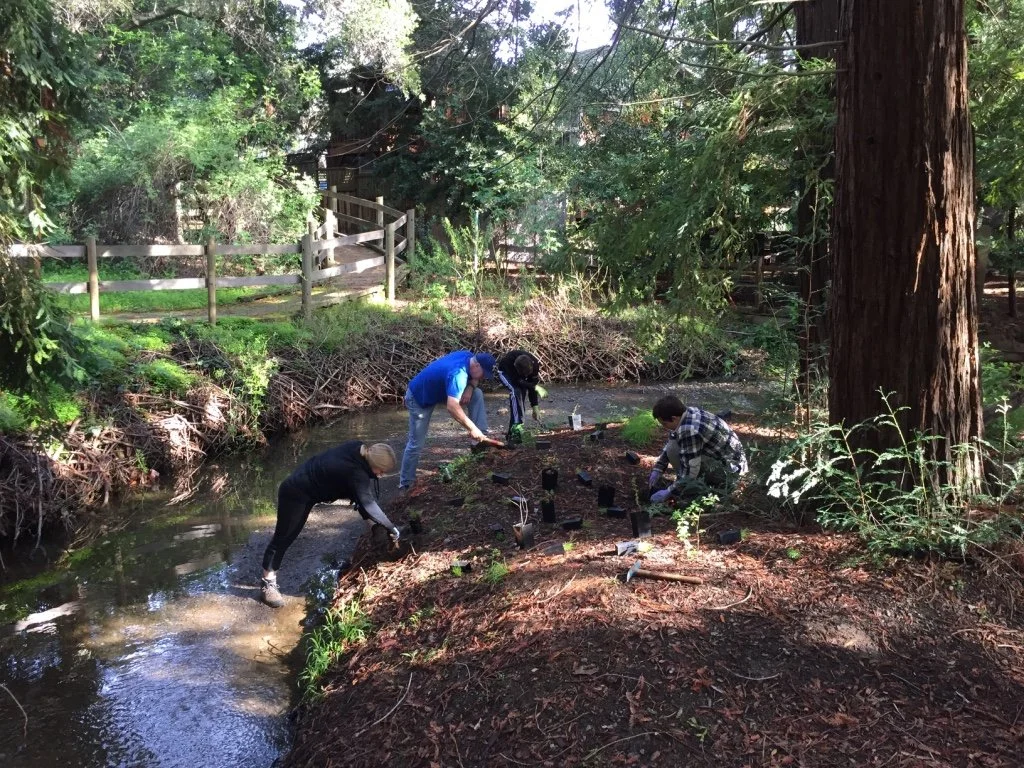
Volunteers install new plants along the creek, a corridor that attracts both wildlife and curious young explorers.
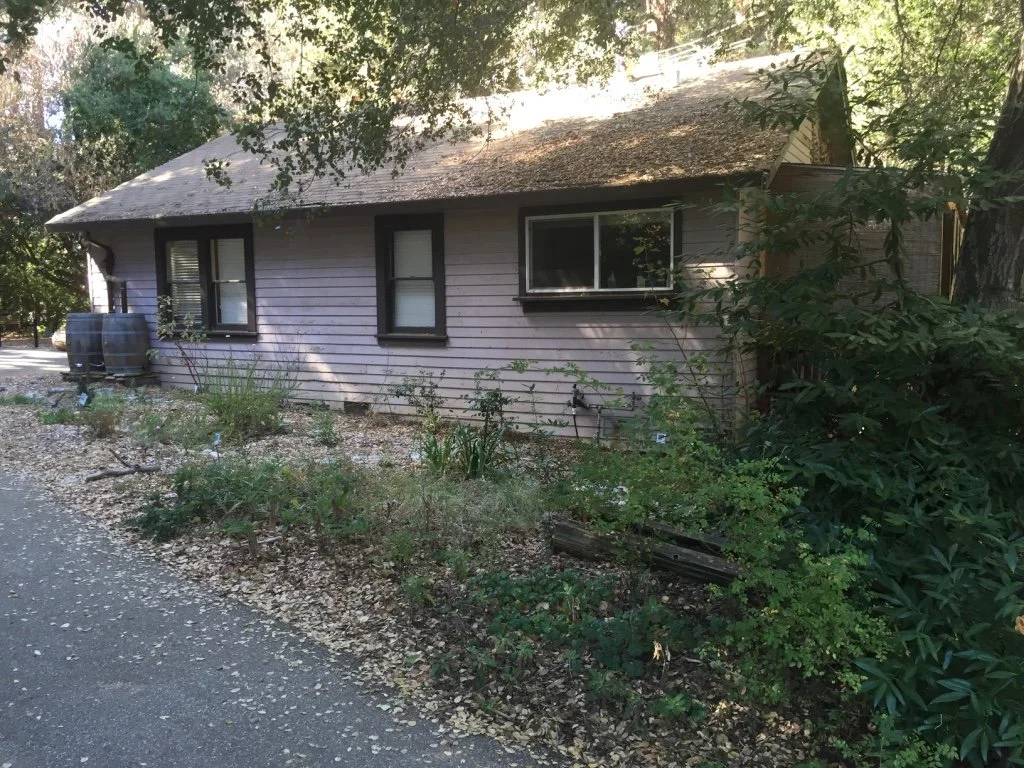
The caretaker cottage that was once a home base for Grassroots Ecology and the Redwood Grove Summer Camp is no longer standing—but the area will soon be reborn as a native plant garden.
How do you want to see this site look 10 years from now?
As Redwood Grove enters a new chapter in its story of restoration, there are a few things I would love to see. First and foremost, I want this preserve to continue to be a natural oasis in the sprawling suburbia of Silicon Valley. I will be grateful if volunteers continue to return year after year to witness the fruits of their labor, and the positive impact they have had on their community.
In this next year, our biggest project will be developing a garden in the open space that the caretaker cottage once occupied. When it was first demolished, many visitors expressed their sadness in the removal of the historic building. My hope is that our garden will soon become the familiar landmark to visitors that the cottage once was. The garden will feature a diverse range of native plants, and its meandering paths will offer more opportunities for visitors to immerse themselves in nature.
Want to be part of Redwood Grove’s next chapter? Explore our calendar of events to find upcoming volunteer opportunities at Redwood Grove and other restoration sites throughout the region. You can also learn more about Redwood Grove on our website. Whether you're visiting for the first time or returning to a place you've known for years, we hope you'll join us in caring for this special landscape and helping shape its future.
By Brian Tatsuta, Project Lead